Why Nuclear Energy Is Still a Great Investment Opportunity (Yes, Even Now)

Back in one of the very first posts on this blog, published in January 2025, I wrote about what I believed would be the real investment trend of the next 10 years, a trend that, at the time, no one was really talking about: nuclear energy.

I won’t go into all the reasons why I think nuclear is one of the most promising long-term sectors, if you’re interested in the full breakdown, you can read my original analysis here, but today I want to focus on what has happened in recent months and explain why there’s still time to jump on this train.

Sure, it would’ve been better a few months ago (spoken like someone who bought Oklo stock back in June 2024 at around $8.5 per share, which now trades at $75.5, nearly a 9x return in just over a year). But the opportunity is far from over.

Nuclear Momentum Is Accelerating, And Governments Are Leading the Charge

Over the past seven months, interest in nuclear energy has exploded. Several nuclear-related stocks have posted double, or even triple, digit gains. But this isn’t just another speculative bubble, governments are taking real action.

In the U.S., for instance, President Trump signed four executive orders on May 23 focused on reviving the nuclear sector. The event at the White House included key industry stakeholders, including developers of Small Modular Reactors (SMRs), which are widely seen as the most promising nuclear tech going forward.

The takeaway? Momentum is building, and it’s being backed by policy, funding, and regulation.

“Did I Miss the Train?” Not Quite, Here’s Why It’s Still Early

Many investors might feel like nuclear is the next AI, something that’s already taken off. But unlike AI, which is full of promise but still searching for real-world business models, nuclear energy is proven, practical, and deeply needed.

Here are a few key reasons why this is still a ground-floor opportunity:

1. The Technology Race Is Wide Open

We don’t yet know which technologies will dominate (SMRs, fast reactors, fusion?), which companies will win, or which business models will scale profitably. This uncertainty may deter conservative investors, but for those willing to take some risk, it means plenty of upside.

2. Regulatory and Political Decisions Will Be Game-Changers

Nuclear is heavily regulated. In some countries, policies are already favorable; in others, they’re still under discussion. The good news? The global shift toward pro-nuclear regulation is real. Once key legislation and incentives fall into place, early movers could benefit massively.

3. We Know the World Will Need Way More Energy, We Just Don’t Know How Much

Between AI, electric vehicles, digital infrastructure, and even water desalination, global energy demand will skyrocket. Nuclear is one of the few technologies capable of delivering constant, large-scale, carbon-free power.

4. It’s a Vertically Diverse Sector

The nuclear ecosystem is broad and includes:

  • Reactor developers and builders (like Oklo, NuScale, TerraPower)
  • Uranium miners and enrichment companies (like Energy Fuels Inc.)
  • Utility providers integrating nuclear into their energy mix
  • Engineering and construction firms building critical infrastructure

This creates plenty of angles for investors, from hardware to materials to services.

5. The Fundamentals Are Real, Not Just Narrative

Unlike AI, which still struggles with commercialization in many areas, nuclear energy already powers entire countries. The historical drawbacks, high costs and long build times, are being addressed with new technologies like SMRs that offer faster deployment and lower capital requirements.

Case Study: Oklo

Let’s make it tangible. Just look at what’s happened with Oklo in the past few weeks.

The company has:

  • Successfully completed the U.S. Nuclear Regulatory Commission’s pre-application review for its first commercial plant, the Aurora Powerhouse
  • Signed a key agreement with Kiewit Nuclear Solutions Co., which will be the lead construction partner for the Aurora plant in Idaho (scheduled for 2027–2028)
  • Announced a partnership with Liberty Energy to provide turnkey energy solutions that combine Liberty’s natural gas generation systems with Oklo’s advanced nuclear technology; this joint effort will initially rely on Liberty’s Forte natural gas generation and load management systems to meet immediate energy needs, while simultaneously laying the groundwork for the future integration of Oklo’s Aurora nuclear plants, offering zero-carbon baseload power in the years ahead.

In short: Oklo is no longer a future concept. It’s becoming an industrial reality.

What About Thematic ETFs?

I’m usually not a big fan of thematic ETFs. They tend to follow market hype and can expose investors to redundant fees and unbalanced portfolios.

But in this case, I’m willing to make an exception.

Here’s why:

  • The sector is emerging, but not overhyped
  • There are relatively few major players, making ETF exposure efficient
  • It’s heavily influenced by government regulation, meaning individual stock picking could be more volatile

Thematic ETFs allow investors to gain exposure to a broad range of companies, from miners to utilities to reactor tech developers—without betting everything on one horse. They offer a way to ride the trend while spreading the risk.

If you’re new to the sector or simply looking for a diversified entry point, this is one of the rare cases where a thematic ETF actually makes sense.

Final Thoughts

The nuclear energy trend is solid, structural, and still in its early days. Yes, some valuations have already jumped. But we’re far from a mature or saturated market.

As always, risks remain—but for long-term investors looking to align sustainability, innovation, and energy demand, nuclear could be one of the most compelling bets of the decade.
Are Tariffs Really Beneficial for the U.S.?

Let’s set the record straight right away: tariffs are nothing more than a tax imposed on goods a country imports from another. Imagine you’re buying a pair of shoes from a foreign store. Without tariffs, you just pay for the shoes and shipping. With tariffs, however, that price gets bumped up with an extra tax, increasing the final cost. Now, you might ask, “Why do these tariffs exist?” The answer is more complicated than it seems, but at its core, it all comes down to trade policy. The truth? In the long run, tariffs are a bomb that blows up the economies of the countries imposing them, causing more harm than good. But let’s break it down.

Trump and the Tariff Threat: The Return of the Trade War

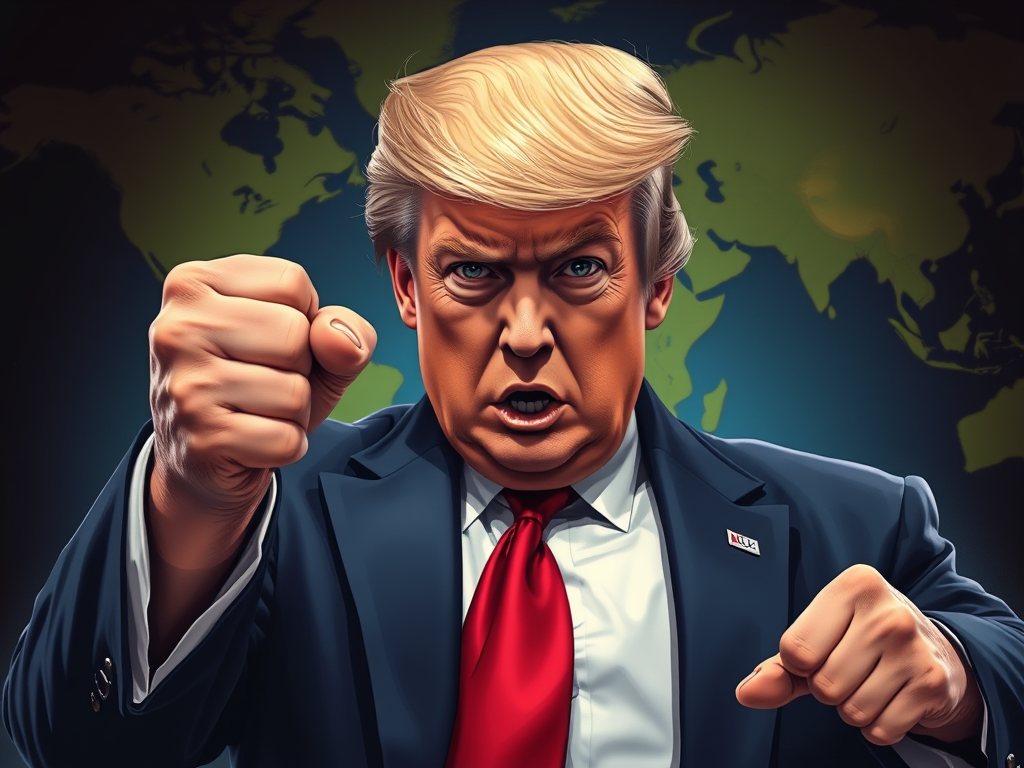
For several months now, tariffs have been back in the spotlight, mainly thanks to Donald Trump. The U.S. president has ridden the wave of protectionism, threatening to impose tariffs on a slew of products from countries like China, the European Union, and even Canada and Mexico. His official goal is to protect American companies and workers, trying to push foreign producers to shift their manufacturing to the U.S., thereby benefiting local producers.

But the truth is that the result of these tariffs hasn’t exactly been what was expected. Instead of boosting the American economy, Trump has created a spiral that has harmed both consumers and American companies.

How Tariffs Work and Why They’re Harmful

Imagine you’re a business owner importing machinery from another country. With tariffs, the cost of that machinery rises. Now, you have two choices: you can either keep your product prices the same, but in that case, you’ll have to reduce your profit margins, or you can raise prices to maintain competitiveness, passing on the cost of the tariffs to the consumers. And here’s where the problem starts.

The final consumer ends up paying more for the same goods, and the immediate effect is a reduction in consumer spending. If a person has to pay more for an imported t-shirt or a car, they’ll spend less on other things, like a vacation or going out with friends. The overall demand for goods and services drops, creating a negative spiral that reflects across the entire economy.

In other words, tariffs are not a solution but a problem that impacts every level of the economy. And let’s not forget that the impact of tariffs isn’t limited to the imported sector. If a country’s industry is forced to pay more for imported raw materials, the cost of production rises, which could lead to price hikes on products in the domestic market.

The Parallel with Financial Markets

Now, let’s get to the heart of the matter: tariffs also have devastating effects on financial markets. The threat of tariffs has caused instability, resulting in market volatility. The reason is simple: tariffs create uncertainty. Investors don’t know what to expect, and an uncertain market is one that doesn’t inspire confidence.

Take, for example, the periods when Trump announced tariff threats. The result was almost always panic. Stock markets began to plummet because investors feared that a global trade war could reduce company profits, especially for those dependent on imports and exports. Think of giants like Apple, which manufactures its devices in China. A tariff increase on components could force Apple to either raise its prices or reduce its profit margins, negatively affecting its earnings.

The outcome of all this is that the market enters a phase of contraction, where investors, concerned about potential losses, begin selling off stocks, driving share prices down. Uncertainty breeds fear, and fear leads to a reduction in investments, further slowing down economic growth.

The Effect of Tariffs and Exchange Rates: The Balancing Act

In the short term, tariffs seem to have a direct and immediate impact on prices and the economy, but in the medium to long term, there’s another factor that comes into play: exchange rates. When a country imposes tariffs, it not only raises the cost of imported goods but can also influence the value of its currency, triggering a complex mechanism that can be “mediated” through the currency exchange rate.

Take the United States as an example. If Trump imposes tariffs on Chinese imports, China may respond by devaluing its currency. A devaluation makes Chinese products cheaper for the U.S., partially offsetting the effect of the tariffs. In this case, the devaluation of the Chinese yuan could keep Chinese exports competitive, despite the tariff-induced price hike. On the other hand, the U.S. dollar could strengthen, making American exports more expensive to other countries, reducing the competitiveness of American businesses abroad.

In the medium to long term, these adjustments in exchange rates can soften the direct effects of tariffs, but they don’t eliminate the volatility created in the markets. Furthermore, the effects on exchange rates are difficult to predict and depend on a range of factors, including the monetary policies of central banks and investor expectations. So, while exchange rates can “mitigate” the impact of tariffs, the confusion and uncertainty they generate are another destabilizing factor for global markets.

In essence, exchange rates act as a sort of “filter” that tries to compensate for the effects of tariffs, but in an interconnected economic system, the responses are never linear, and the adjustments are often slower and more complicated than anticipated.

The Collateral Damage: Who Loses?

In the end, the people who lose are always the consumers and workers. Consumers lose because they pay more for goods. Workers lose because, in many cases, companies are forced to cut production, lay off employees, or move factories abroad to avoid the high costs. The overall effect of a protectionist policy is that it reduces competitiveness and efficiency in an economy, risking a stagnation.

What Can We Learn from Tariffs?

We’ve learned that tariffs are a superficial solution, providing the illusion of protecting the national economy, but in reality, they cause more damage than they solve. They are a bit like medicine that relieves the symptoms of an illness, but in the long run, worsens the situation.

History shows us that global economies are interconnected, and protectionist policies only create friction, raising costs and limiting growth opportunities. True growth comes from market openness, innovation, and cooperation, not from building economic walls.

Conclusion: Better Without Tariffs, Thanks

In a world already facing huge challenges, like climate change and digital transformation, the solution is not to raise trade barriers. Instead, we should focus on policies that promote global integration and innovation. Only then can we genuinely stimulate sustainable economic growth. Because, in the end, when the economy grows, opportunities grow for everyone. And all of this, without the need for tariffs.