Determining Your Risk Tolerance: The Key to Successful Investing

In the world of investing, the concept of risk is ever-present. We hear about it in terms of performance, management, measurement, and strategies. Often, when thinking about how to manage investments, investors tend to focus too much on mathematical and quantitative metrics such as standard deviation, value-at-risk (VaR), or the well-known Sharpe ratio. While these tools are useful for financial analysts, the true heart of risk management lies in a much more personal and subjective concept: your risk tolerance.

Risk isn’t just a mathematical calculation; it’s also about the ability and willingness to take on risk. Every investor has a different perception of risk, which reflects not only the types of assets they invest in but also their emotional and psychological responses to market movements. Understanding your risk tolerance is critical to developing an investment strategy that meets your long-term goals without keeping you awake at night.

The Nature of Risk: More Than a Mathematical Issue

Financial risk can be defined as the uncertainty about the future returns of an investment. While tools like Monte Carlo simulations or standard deviation analysis may provide statistical insights into the likelihood of gains or losses, they can’t predict the unpredictable. The greatest risk is always the unknown—the uncertainty every investor must deal with. No matter how sophisticated the analytical tools are, there’s always an element of risk that remains out of sight.

There are three categories of risk in investment theory: the “known-knowns”, the “known-unknowns”, and the “unknown-unknowns”. These concepts help us understand that, despite all the technology and economic forecasting, the future is inherently unpredictable. Investors, therefore, can never be completely prepared for every eventuality. The only aspect we can exercise direct control over is our approach to risk management.

Risk Tolerance: Capacity vs. Willingness

When talking about risk tolerance, it’s important to distinguish between your capacity to take on risk and your willingness to do so. Capacity is based on objective factors such as age, net worth, income, future earnings potential, and your investment horizon. A young professional, for example, has a greater capacity to take on risk since they have a longer investment horizon and can afford to recover from any potential losses.

However, your willingness to take on risk is a different matter. Even if you have the capacity to bear higher risk, you may not feel comfortable doing so. Your emotional tolerance for risk may dictate your investment choices. Some investors may prefer a more conservative strategy to help them sleep better at night.

It’s important to find a balance between your ability to take on risk and your comfort level. While you may think that holding cash in a savings account is risk-free, inflation can erode your purchasing power, which could jeopardize your ability to meet long-term financial goals.

The Types of Risks You Should Consider

When you invest, you face various types of risk, which manifest in different ways. The key risks to be aware of are:

  1. Permanent loss of capital: The possibility of losing your investment irreversibly. This is one of the most severe risks, as there is no way to recover a permanent loss.
  2. Downside risk: The risk of losing more than you are emotionally or financially prepared to handle.
  3. Upside risk: The fear of missing out on potential gains. In other words, the risk of not capturing growth opportunities.
  4. Loss of purchasing power (inflation): Inflation diminishes the real value of money over time. Even if the nominal value of your portfolio increases, inflation can erode your purchasing power, undermining your long-term goals.
  5. Failing to reach your financial goals: This is the most impactful risk because failing to achieve your goals (such as retirement or funding education) has a direct effect on your quality of life. This type of risk is far more damaging than the volatility of returns.

Risk Tolerance: How to Evaluate It

Determining your risk tolerance involves considering two primary factors: your ability and your willingness to take on risk. Your ability is measured through objective indicators such as income, net worth, age, and investment horizon. Your willingness is a more psychological aspect and depends on how comfortable you are with market volatility.

If you’re young and have a long-term investment horizon, your capacity to take on risk will be higher. Also, you can assume that your income will rise over time, so you’ll have the ability to replenish any losses through increased savings. However, if you’re nearing retirement, you will need to adjust your portfolio to reduce risk and protect your capital.

Strategies for Managing and Reducing Risk

Since risk can never be fully eliminated, it’s crucial to have a strategy to manage it effectively. Here are some key strategies that can help reduce risk over time:

  1. Have a solid investment plan: This includes setting clear goals and devising a strategy for how you will react to different market scenarios. Writing it down allows you to review it when tempted to make irrational short-term decisions.
  2. Diversification: Spread your investments across different asset classes, geographies, and sectors. While diversification won’t guarantee huge returns, it will help you avoid catastrophic losses.
  3. Asset allocation: This is the mix of stocks, bonds, real estate, cash, and alternative investments in your portfolio. Your asset allocation has a much bigger impact on your returns than any individual stock or fund you choose to invest in.
  4. Rebalancing: Regularly rebalancing your portfolio forces you to sell winners and buy losers to maintain your target asset allocation. Doing this periodically ensures that you remain aligned with your stated risk parameters.
  5. Dollar-cost averaging (DCA): DCA is a strategy that helps you invest periodically over time to reduce the risk associated with market timing. It allows you to spread your purchases over a longer timeframe, making market volatility work in your favor.
  6. Aligning investments with your time horizon: Each financial goal comes with its own time horizon. Short-term goals (e.g., emergency savings) should have lower-risk investments, while long-term goals (e.g., retirement) can afford higher risk in exchange for potential growth.
  7. Control your emotions: Putting your finances on auto-pilot and avoiding the temptation to time the market is essential. Having a well-thought-out plan will also help you stay away from the vicious cycle of fear and greed.
  8. Keep it simple: Simple strategies are often the most effective. Avoid complex products or strategies that you don’t fully understand. This alone will help you avoid unnecessary risk and likely lower your costs.
  9. Save more: The more you save, the lower your risk of not achieving your goals. Increasing your savings reduces your exposure to potential losses and helps you stay on track.

Conclusion

Investing is a marathon, not a sprint. Acknowledging that we cannot predict the future and that there will always be unknown risks is an essential step toward managing your emotions and minimizing unnecessary risk. Risk tolerance is the first step in crafting a successful investment strategy that works for you—one that aligns with your goals, limits unnecessary anxiety, and increases the likelihood of success in an unpredictable world.

Are Tariffs Really Beneficial for the U.S.?

Let’s set the record straight right away: tariffs are nothing more than a tax imposed on goods a country imports from another. Imagine you’re buying a pair of shoes from a foreign store. Without tariffs, you just pay for the shoes and shipping. With tariffs, however, that price gets bumped up with an extra tax, increasing the final cost. Now, you might ask, “Why do these tariffs exist?” The answer is more complicated than it seems, but at its core, it all comes down to trade policy. The truth? In the long run, tariffs are a bomb that blows up the economies of the countries imposing them, causing more harm than good. But let’s break it down.

Trump and the Tariff Threat: The Return of the Trade War

For several months now, tariffs have been back in the spotlight, mainly thanks to Donald Trump. The U.S. president has ridden the wave of protectionism, threatening to impose tariffs on a slew of products from countries like China, the European Union, and even Canada and Mexico. His official goal is to protect American companies and workers, trying to push foreign producers to shift their manufacturing to the U.S., thereby benefiting local producers.

But the truth is that the result of these tariffs hasn’t exactly been what was expected. Instead of boosting the American economy, Trump has created a spiral that has harmed both consumers and American companies.

How Tariffs Work and Why They’re Harmful

Imagine you’re a business owner importing machinery from another country. With tariffs, the cost of that machinery rises. Now, you have two choices: you can either keep your product prices the same, but in that case, you’ll have to reduce your profit margins, or you can raise prices to maintain competitiveness, passing on the cost of the tariffs to the consumers. And here’s where the problem starts.

The final consumer ends up paying more for the same goods, and the immediate effect is a reduction in consumer spending. If a person has to pay more for an imported t-shirt or a car, they’ll spend less on other things, like a vacation or going out with friends. The overall demand for goods and services drops, creating a negative spiral that reflects across the entire economy.

In other words, tariffs are not a solution but a problem that impacts every level of the economy. And let’s not forget that the impact of tariffs isn’t limited to the imported sector. If a country’s industry is forced to pay more for imported raw materials, the cost of production rises, which could lead to price hikes on products in the domestic market.

The Parallel with Financial Markets

Now, let’s get to the heart of the matter: tariffs also have devastating effects on financial markets. The threat of tariffs has caused instability, resulting in market volatility. The reason is simple: tariffs create uncertainty. Investors don’t know what to expect, and an uncertain market is one that doesn’t inspire confidence.

Take, for example, the periods when Trump announced tariff threats. The result was almost always panic. Stock markets began to plummet because investors feared that a global trade war could reduce company profits, especially for those dependent on imports and exports. Think of giants like Apple, which manufactures its devices in China. A tariff increase on components could force Apple to either raise its prices or reduce its profit margins, negatively affecting its earnings.

The outcome of all this is that the market enters a phase of contraction, where investors, concerned about potential losses, begin selling off stocks, driving share prices down. Uncertainty breeds fear, and fear leads to a reduction in investments, further slowing down economic growth.

The Effect of Tariffs and Exchange Rates: The Balancing Act

In the short term, tariffs seem to have a direct and immediate impact on prices and the economy, but in the medium to long term, there’s another factor that comes into play: exchange rates. When a country imposes tariffs, it not only raises the cost of imported goods but can also influence the value of its currency, triggering a complex mechanism that can be “mediated” through the currency exchange rate.

Take the United States as an example. If Trump imposes tariffs on Chinese imports, China may respond by devaluing its currency. A devaluation makes Chinese products cheaper for the U.S., partially offsetting the effect of the tariffs. In this case, the devaluation of the Chinese yuan could keep Chinese exports competitive, despite the tariff-induced price hike. On the other hand, the U.S. dollar could strengthen, making American exports more expensive to other countries, reducing the competitiveness of American businesses abroad.

In the medium to long term, these adjustments in exchange rates can soften the direct effects of tariffs, but they don’t eliminate the volatility created in the markets. Furthermore, the effects on exchange rates are difficult to predict and depend on a range of factors, including the monetary policies of central banks and investor expectations. So, while exchange rates can “mitigate” the impact of tariffs, the confusion and uncertainty they generate are another destabilizing factor for global markets.

In essence, exchange rates act as a sort of “filter” that tries to compensate for the effects of tariffs, but in an interconnected economic system, the responses are never linear, and the adjustments are often slower and more complicated than anticipated.

The Collateral Damage: Who Loses?

In the end, the people who lose are always the consumers and workers. Consumers lose because they pay more for goods. Workers lose because, in many cases, companies are forced to cut production, lay off employees, or move factories abroad to avoid the high costs. The overall effect of a protectionist policy is that it reduces competitiveness and efficiency in an economy, risking a stagnation.

What Can We Learn from Tariffs?

We’ve learned that tariffs are a superficial solution, providing the illusion of protecting the national economy, but in reality, they cause more damage than they solve. They are a bit like medicine that relieves the symptoms of an illness, but in the long run, worsens the situation.

History shows us that global economies are interconnected, and protectionist policies only create friction, raising costs and limiting growth opportunities. True growth comes from market openness, innovation, and cooperation, not from building economic walls.

Conclusion: Better Without Tariffs, Thanks

In a world already facing huge challenges, like climate change and digital transformation, the solution is not to raise trade barriers. Instead, we should focus on policies that promote global integration and innovation. Only then can we genuinely stimulate sustainable economic growth. Because, in the end, when the economy grows, opportunities grow for everyone. And all of this, without the need for tariffs.

Three Years Since the Russian Invasion of Ukraine: A Tragedy That Taught Us Valuable Lessons

Today, February 24, 2025, marks exactly three years since the Russian invasion of Ukraine. This event has profoundly impacted not only the history of our time but also global geopolitics and the way we live. The human suffering, destruction, and uncertainty that followed this conflict are difficult to measure, but the world did not stop. Global economies, investors, and financial markets have continued to evolve, adapting to a situation that initially seemed impossible to predict.

Today, we want to reflect on what these three years have taught us. Not only about political and military dynamics but also about how such significant geopolitical events can influence financial markets, and, most importantly, how we can draw lessons from history to face future uncertainties.

The Stock Market’s Reaction to Geopolitical Shocks

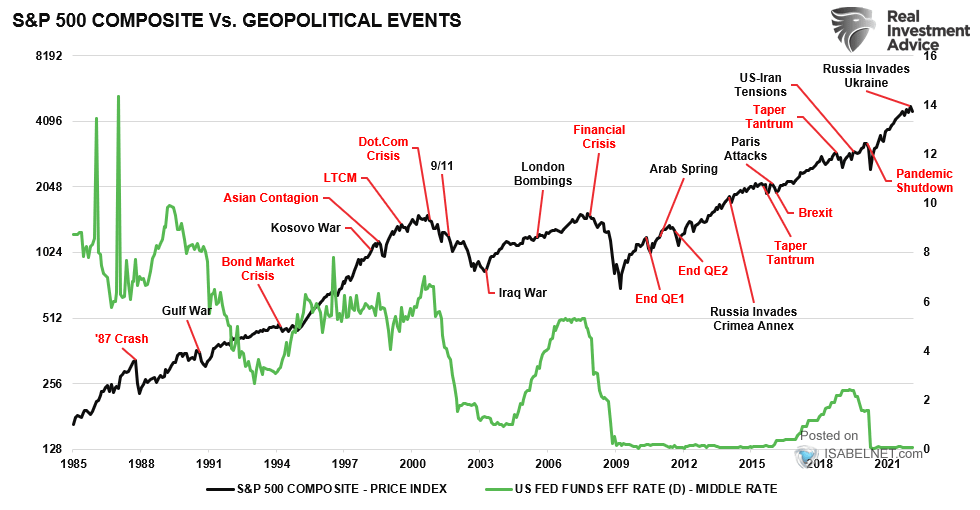
The situation in Ukraine made me reflect on how geopolitical events influence financial markets. One of the most useful tools for understanding these dynamics is historical analysis, particularly the LPL Research chart, which shows the S&P 500’s reaction during major geopolitical shock events over the last decades.

What stands out from this analysis is clear: wars and geopolitical shocks can create turmoil in financial markets, but historically, they have never led to the end of the stock market. Sure, there are moments of intense volatility, but the market has always had the ability to recover. Crises, while painful and destabilizing, are part of the cyclical nature of markets.

The interesting fact, however, is that the emotional reaction caused by these events remains similar over time. Fear, uncertainty, and instability drive mass sell-offs, but that does not mean the market crashes permanently. In fact, looking at past events, we can see that the market, despite initial turbulence, has always rebounded. Therefore, although no one can predict with certainty what will happen in the future, history teaches us to reason rationally rather than follow the emotional impulse of the moment.

The Lesson of Human Progress: Investing with Rationality

Geopolitical crises show us the resilience of society and human economies. History teaches us that, despite the initial chaos, opportunities for growth and progress never stop. Over the long term, the market has always reacted to crises with innovation, adaptation, and, above all, a desire to overcome adversity.

Take past wars as an example: World War II, the Vietnam War, or even the 2008 financial crisis. In all of these cases, the market reactions were initially severe, but eventually, the economy recovered and continued to grow. It is essential to remember that humanity has an extraordinary capacity for renewal, and this is something investors need to keep in mind.

History teaches us that the odds are in our favor when we bet on creativity, technological progress, and resilience. The war in Ukraine, sadly, is an example of how devastating geopolitical events can be, but also of how, in the long term, the adaptability of markets and global economies can transform these challenges into opportunities for growth.

Geographic Diversification: Protection Against Shocks

Another crucial lesson that emerges from situations like the Russian invasion of Ukraine is the importance of geographic diversification in investments. When the Russian stock market collapsed by 50% on February 24, 2022, the negative effects were felt immediately. However, the losses were not universal, and diversification played a key role in mitigating the impact.

To provide a concrete example, Russia accounted for 0.38% of the MSCI All World Index and 2.99% of the MSCI Emerging Markets Index. This means that even if the Russian economy had completely collapsed, the total loss for global investors would have been limited to 0.38% in one case and 2.99% in the other. This example underscores the importance of having a well-diversified portfolio geographically, to limit the impact of isolated events that may trigger strong turmoil in a specific region.

Geographic diversification is not only a prudent strategy; it is a real form of protection against uncertainty. When a local market experiences severe shocks, other sectors or geographic areas may still perform positively, compensating for the losses. History teaches us that events like wars, political crises, or economic shocks have a limited impact if the portfolio is well-balanced across different regions and sectors.

Conclusion

Looking back at these three years, we can see how the stock market, despite the initial difficulties caused by the Russian invasion of Ukraine, is slowly recovering. Resilience and the ability to adapt are intrinsic characteristics of markets, and our role as investors is to navigate uncertainty with rationality, keeping in mind the lessons of the past. Geographic diversification is a fundamental strategy for protecting your portfolio and handling periods of turbulence.

The future is never certain, but with proper planning, we can be better prepared to face it with greater confidence, knowing that hardships, no matter how significant, are never meant to last forever.

Stock Buybacks: Why Companies Repurchase Their Own Shares and What It Means for Shareholders

Stock buybacks, or share repurchases, have become a prominent feature in modern corporate finance. For many companies, buying back their own stock has become an integral part of their capital allocation strategy. But why do companies engage in buybacks? How do they impact shareholders? And, perhaps more importantly, when are stock buybacks truly beneficial for shareholders, and when do they raise questions about a company’s long-term health?

In this article, we’ll explore the motivations behind stock buybacks, their advantages and disadvantages, and when investors should be cautious about such corporate actions.

What Are Stock Buybacks?

A stock buyback occurs when a company purchases its own shares from the open market, thereby reducing the total number of outstanding shares. This reduction in shares can increase the ownership percentage of remaining shareholders, as well as improve key metrics like earnings per share (EPS) and return on equity (ROE). Essentially, a buyback allows a company to return capital to shareholders without the complexity of paying dividends.

Why Do Companies Repurchase Their Own Shares?

Companies engage in stock buybacks for a variety of reasons, but the most common motivations are as follows:

  1. Undervaluation Perception: One of the most compelling reasons for a buyback is the belief that the company’s stock is undervalued in the market. If a company’s management believes that the market is not fully recognizing its potential, repurchasing shares can be a way to take advantage of the perceived discount, effectively investing in its own future growth.
  2. Capital Allocation Strategy: Companies may have excess capital on hand—often in the form of cash reserves—without immediate investment opportunities that generate returns above their cost of capital. In such cases, buybacks can be a more efficient way to use excess funds, compared to expanding the business or pursuing acquisitions. This is particularly common in industries where organic growth opportunities are limited or where corporate expansion is relatively slow.
  3. Boosting Earnings Per Share (EPS): By reducing the number of shares in circulation, buybacks increase earnings per share (EPS), even if the company’s overall profits stay the same. Since EPS is a widely followed financial metric, this can make the company appear more profitable and potentially drive up its stock price.
  4. Tax Efficiency: In some jurisdictions, capital gains from the sale of shares may be taxed more favorably than dividends. Therefore, companies might prefer buybacks as a way to return capital to shareholders in a tax-efficient manner, especially when the tax burden on dividends is high.
  5. Return Capital to Shareholders: Instead of distributing cash through dividends, a buyback allows shareholders to decide if they want to sell their shares back to the company, giving them more flexibility in how they receive capital. This can be seen as a more attractive option for shareholders who may not want to receive dividends due to tax considerations or who may prefer capital appreciation.

When Are Stock Buybacks Beneficial to Shareholders?

While buybacks can be a sign of a company’s financial health and discipline, they do not always lead to positive outcomes for shareholders. The timing and execution of the buyback are crucial factors in determining whether it will benefit shareholders.

Here are some scenarios where stock buybacks are generally favorable for shareholders:

  1. When a Company Is Undervalued: If the company’s management believes the stock is undervalued, repurchasing shares can be a wise use of capital. This is especially true if the company’s intrinsic value—based on its assets, earnings potential, and competitive advantages—significantly exceeds the current market price. In this case, buybacks can create long-term value by purchasing shares at a discount, potentially benefiting existing shareholders as the market re-rates the stock.
  2. Excess Cash Without Better Investment Opportunities: When a company is sitting on significant cash reserves but doesn’t have clear, high-return investment opportunities, buybacks can be a logical decision. It’s better to return excess capital to shareholders than to keep it locked up with minimal returns. For shareholders, this means a more efficient use of capital and a potential increase in the value of their holdings due to the reduced share count.
  3. Favorable Timing and Market Conditions: If buybacks are executed at an opportune time—such as when market conditions are stable and the company’s stock price is depressed due to broader market trends—a buyback can be an efficient way to deploy capital. Investors benefit as the share price recovers over time, especially if the company maintains its underlying business fundamentals.
  4. Boosting Long-Term Value: Buybacks can have a positive impact on long-term shareholder value if they reflect management’s confidence in the company’s prospects. When buybacks signal that a company is using its capital in a strategic and disciplined manner, shareholders may see a long-term uplift in both the stock price and profitability.

When Are Stock Buybacks Not Favorable to Shareholders?

While stock buybacks can be beneficial in certain conditions, they can also be counterproductive, particularly when they are done for the wrong reasons or in inappropriate circumstances. Here are some situations when stock buybacks may not work in favor of shareholders:

  1. When Companies Are Overpaying for Shares: If a company is buying back stock at an inflated price—especially when its shares are overvalued or its fundamentals do not support the market price—the buyback may not be creating value. In such cases, the company is essentially wasting shareholder capital by repurchasing shares at a price higher than their intrinsic value, which can be detrimental to long-term returns.
  2. When Used to Mask Weak Performance: Sometimes, companies use buybacks to artificially inflate earnings metrics like EPS or return on equity (ROE), making the business appear more profitable than it is. If a company is struggling with slow growth or declining profits but continues to repurchase shares to prop up these metrics, it may indicate that management is prioritizing short-term stock price movements over addressing underlying issues. Shareholders may be misled into thinking the company is in better shape than it really is.
  3. Lack of Transparency or Strategy: If buybacks are carried out without clear communication or a transparent strategy, they may signal that the company is not confident about its long-term growth. A company that continually buys back stock without explaining its rationale could be trying to mask underlying weaknesses or avoid investing in its core business operations. For shareholders, this could signal a lack of long-term vision or strategic clarity from management.
  4. Diverting Capital from Growth Opportunities: A company that spends too much money on buybacks at the expense of reinvesting in its business, research and development (R&D), or expansion efforts could be stunting its long-term potential. In this case, while shareholders may benefit from short-term stock price boosts, they could miss out on greater value that could have been created through long-term investments in growth.

Conclusion: Stock Buybacks – A Double-Edged Sword

Stock buybacks are a powerful tool in the arsenal of a company’s financial strategy. When executed with care and for the right reasons—such as returning excess capital, correcting market undervaluation, or optimizing capital structure—buybacks can enhance shareholder value and signal strong financial health.

However, when buybacks are misused—such as when companies overpay for shares, use them to mask weak performance, or prioritize short-term stock price boosts over long-term growth—they can ultimately harm shareholder value and undermine investor trust.

For investors, the key to understanding stock buybacks lies in the timing, transparency, and intent behind them. Thoughtful and strategic buybacks can drive long-term value, while poorly executed ones can merely serve as a smokescreen for deeper issues within the company.

Ultimately, like any corporate action, stock buybacks need to be analyzed in the broader context of the company’s strategy, financial health, and market conditions. Shareholders should remain vigilant, assessing whether buybacks align with long-term value creation or simply reflect management’s attempt to appease short-term market demands.


The Market is Expensive, Should You Wait to Invest?

The world of investing is a jungle of opportunities and uncertainties. One of the most common questions that investors are asking right now revolves around the high levels of the financial markets: is it wise to invest now, when valuations are so high? Should we wait for a correction or even a crash before entering the market? Or is it better to start immediately and begin building a portfolio that aligns with your goals, despite the challenges?

Markets Above the Average: How to Assess the Current Situation?

The financial markets are currently at a point that raises many concerns. Valuation metrics such as the P/E (Price-to-Earnings) and CAPE (Cyclically Adjusted Price-to-Earnings) are well above historical averages, suggesting that stocks are expensive relative to their earnings. In fact, similar values have only been seen in rare instances such as 2000 and 2020. However, it is essential to understand that these numbers alone do not tell the whole story.

While prices are high, the current economic context is different from other periods of market bubbles. Companies are generating solid profits, with strong fundamentals supporting a portion of these elevated valuations. Even so, the question remains: how do we navigate this situation?

Don’t Wait for the Correction: The Best Move Is to Invest Now

One of the most important lessons every investor should learn is that the markets wait for no one. While the temptation to “wait for the correction” might seem reasonable, the reality is that markets can remain irrational for prolonged periods. An attitude of waiting, hoping to buy at lower prices, only risks leading to missed opportunities.

Consider the stock markets of the past few decades: if an investor had stayed out of the market waiting for corrections, they would have missed some of the best historical performances. Moreover, markets don’t always drop as expected, and when a crash finally does come, we may be too scared or indecisive to take the right action.

Cash: A Resource to Use Wisely

Cash plays a crucial role in a well-balanced portfolio, but not in the way many might think. Many investors use cash as a parking spot, waiting for the right moment to enter the market. However, this approach is often counterproductive. Cash should be used as an emergency reserve, a buffer against volatility, and protection in times of economic uncertainty.

Of course, it can be helpful to keep some liquidity for short-term goals that require stability and low volatility. However, it should not become a way to delay exposure to the risks of the markets. In the long term, inflation and the growth of the stock markets tend to erode the purchasing power of cash.

The Risk of Postponing: Losing Opportunities

Every time you delay entering the market, you are simply postponing the risk. Over the long term, markets tend to grow, and any waiting for a “better moment” ultimately reduces your potential for returns. Investment strategies like market timing – trying to predict the right moment to buy or sell – are generally ineffective. While sometimes timing can yield good results, over the long term, this practice often leads to inferior outcomes compared to a consistent and disciplined strategy.

A better approach is to start investing now, with a portfolio that aligns with your financial goals, your risk tolerance, and your time horizon. There’s no need to wait for the “market crash” or chase perfect timing; markets tend to follow growth trends, and the time spent in the market is one of the main factors in wealth creation.

Planning: The Key to Long-Term Success

Investing is not a mysterious art or a game of chance. The real key to investment success is planning and discipline. Building a well-diversified portfolio that properly balances risk and returns is the first step. Having clear financial goals and a defined time horizon will help you withstand short-term fluctuations and make more rational decisions.

Moreover, avoid the mistake of focusing only on immediate returns. True value is created over the long term, and those who invest with a long-term perspective and a well-thought-out strategy will likely be rewarded.

Conclusion: Invest with Awareness, Not Fear

Investing in an expensive market does not necessarily mean making a risky bet. While valuations may seem high, the long-term growth prospects remain positive. The most important lesson is to never delay. Waiting for the “perfect moment” could make you miss out on great opportunities.

Investing with awareness means recognizing that we can’t predict the future, but we can make informed decisions that reflect our goals, our situation, and our risk tolerance. If you invest with a well-defined plan and a long-term strategy, you will be able to navigate any market correction with confidence, without missing the opportunity to build wealth over time.

Investing is a journey, not a destination. And like any journey, the best time to start is always now.

India’s Game-Changing Reforms: A New Era for Global Investments

In today’s global context, marked by growing trade tensions and protectionist policies, India is standing out as an example of economic openness and innovation. While countries like the United States, under the presidency of Donald Trump, have adopted more aggressive tariff policies to protect local industries, India is instead focusing on attracting foreign investments through a series of fiscal reforms and economic policies aimed at enhancing global integration. India’s approach contrasts sharply with other nations that view protectionism as a response to internal economic challenges.

At a time when international trade is shaped by the trade rivalry between superpowers like the U.S. and China, India is positioning itself as a beacon of stability and opportunity for global businesses. The reforms announced in the 2025 budget are a clear testament to the country’s intention to push for further market openness, reduce bureaucracy, and foster growth through foreign investments. This approach not only has the potential to strengthen India’s economy but also offers a competitive advantage to companies looking to invest in a country that provides increasingly rare opportunities for free market access in emerging markets.

India in the Spotlight: New Reforms to Attract Foreign Investments and Their Impact on the Economy

India is at a pivotal moment in its economic evolution. With the approval of the 2025 fiscal year budget, the Indian government has announced a package of fiscal reforms set to come into effect on April 1, 2025. These measures are designed to make India even more attractive to foreign direct investment (FDI). They promise to stimulate economic growth, reduce operating costs, and create new opportunities for global companies across various sectors. In this article, we explore how these reforms may affect India’s economy and the valuation of local companies, with a focus on how multinational companies worldwide can benefit.

1. New Tax Code: Simplification and Greater Transparency

One of the main innovations is the revision of the Tax Code. With the introduction of clearer and more transparent regulations, India aims to reduce legal disputes and ensure a more predictable environment for businesses. While corporate tax rates will remain unchanged, the simplification of the rules will provide greater certainty to multinational companies looking to invest in the country. This could lead to less bureaucratic complexity, a significant advantage for companies wanting to expand operations in a rapidly growing market like India.

This reform will enable companies to better plan their tax strategies, reducing the legal risks associated with understanding and applying the regulations, and improving India’s competitiveness as an investment destination.

2. Customs Duty Revisions: Incentives for Local Production

Another important move involves the revision of customs duties, with changes designed to stimulate local production. The new policies will provide tax exemptions for companies investing in domestic manufacturing, with the goal of boosting India’s industrial base. This approach will not only lower operating costs for foreign companies producing in India but will also incentivize the creation of production facilities, further supporting domestic economic growth.

Global companies choosing to establish manufacturing plants in India will benefit from potentially lower production costs, access to a growing market, and the opportunity to leverage an expanding consumer base.

3. Favorable Tax Regime for Non-Residents in the Electronics Sector

India has decided to introduce a favorable tax regime for non-residents operating in the electronics sector. This new system will impose a tax rate of 8.75% on gross revenues for companies providing technology or services in the electronics field. This measure is set to transform India into a global hub for technological innovation, encouraging investment in high-growth sectors such as semiconductor manufacturing, electronic devices, and digital solutions.

Global technology multinationals could benefit from a more favorable tax environment, making it easier for them to enter or expand in the Indian market, which is one of the world’s most promising for digitalization and the adoption of new technologies.

4. Simplified Tax Controls: Reducing Bureaucracy

Another significant step is the simplification of tax controls, particularly in the area of transfer pricing. Controls on transactions between affiliated companies, which were previously conducted annually, will now take place every three years. This reduction in the frequency of tax audits will ease the bureaucratic burden on companies, allowing them to focus more on growth and innovation. Additionally, the expansion of “safe harbors” will help minimize tax disputes, creating a more stable environment for foreign investors.

The introduction of these measures will make India a more business-friendly country, reducing uncertainties related to compliance costs and tax disputes.

5. Reforms in the Insurance Sector: New Opportunities for Foreign Investment

Finally, one of the most exciting developments is the reform of the insurance sector, which will allow foreign investors to acquire up to 100% of companies that reinvest in India. This represents a significant opportunity for global investors looking at India as a growing market for financial and insurance services. The changes could also spur greater innovation in the sector, leading to faster growth and enhanced competitiveness for local businesses.

Implications for the Indian Economy and the Market for Companies

The new fiscal measures and reforms have the potential to significantly impact the Indian economy, promoting sustainable growth and improving India’s position as a destination for global investment. Indian company valuations may rise as the influx of foreign investments boosts the growth of strategic sectors, including technology, manufacturing, and financial services.

Furthermore, India could become an increasingly important hub for technological innovation and advanced manufacturing, with a highly skilled and ever-evolving labor market, attracting companies from all over the world looking to capitalize on its potential.

In conclusion, these reforms make India an ideal environment for companies seeking to expand in the Asian market. The opportunities offered by the new fiscal policies, the incentivization of local production, the simplification of tax controls, and the liberalization of the insurance sector are just a few of the factors that could significantly reshape the landscape for foreign investments in the country.

The Super Bowl Is Over, But a Key Lesson Remains for Investors

The Super Bowl may be behind us, but its lessons are still incredibly relevant for those striving for success in the world of investing. Just like football, the path to financial success is built on strategy, adaptability, and resilience. It’s not about one big move, but rather a well-structured plan and the ability to stay calm under pressure. Here’s what investors can learn from football teams to navigate financial markets successfully.

A Solid Plan, but Flexible

In football, no team arrives at the Super Bowl without a meticulously crafted game plan. Coaches spend weeks analyzing opponents, studying plays, and preparing for every scenario. Yet, when the game begins, coaches are ready to adjust. Injuries happen, defenses tighten, and unexpected plays can shift the momentum.

The same is true in investing. It’s not enough to have a plan; one must be prepared to modify it based on market changes, economic surprises, and unpredictable fluctuations. Recessions, political shifts, and monetary policy changes are the “injuries” of the market. If an investor can’t adapt, they risk losing the opportunity to protect their capital—or worse, missing out on a chance to benefit from changing circumstances. Flexibility is key. A clear strategy is essential, but the ability to adjust when needed is just as important.

Consistency First: Small Steps, Big Results

Just as a football team doesn’t win with one big play, an investor cannot rely on a few lucky bets. Success in football, as in investing, is built on a foundation of consistency and discipline. Instead of chasing quick gains, successful investors adopt a philosophy of steady growth, investing regularly, and staying calm during times of market volatility.

The trick isn’t making one big play; it’s making small, steady progress. Investors who create wealth over time do so by sticking to a disciplined strategy, not by hoping for a one-time windfall. Meme stocks and speculative bets may look enticing, but true wealth comes from a methodical, long-term approach—even when the market experiences turbulence.

Diversification: The Key to Managing Risk and Maximizing Opportunities

In football, every player has a crucial role: quarterbacks, offensive linemen, defenders, and kickers all contribute to the team’s success. If a team relies on one or two star players, it’s vulnerable to being neutralized. The same applies to investing. A winning portfolio doesn’t depend on a single stock or asset. Diversification is the principle that protects investors from the risky concentration in one area of the market.

Certain assets will shine in a bull market (growth stocks, for instance), while others—like bonds or defensive sectors—perform better during tough times. Diversification is essential because it allows you to weather any economic condition and protect your portfolio in times of disruption. Just as a football team needs all of its players to succeed, a well-diversified portfolio needs a mix of assets to safeguard an investor from potential setbacks.

Defense: Protecting Your Capital

“They say offense wins games, but defense wins championships.” This old adage in football applies perfectly to investing. Focusing solely on returns without considering risk protection can lead to catastrophic losses during difficult market phases. Savvy investors don’t chase short-term gains—they focus on safeguarding their capital with solid risk management strategies.

Risk management involves diversification, using stop-loss orders, and understanding your exposure to specific risks. Just as a good defense can prevent a fumble and determine the outcome of a game, a solid defense in investing can mean the difference between mediocre performance and long-term success.

Control Your Emotions and Play the Whole Game

The Super Bowl is filled with high-pressure moments, and the best players remain calm, executing their game plan, while others let the moment overwhelm them, leading to costly mistakes.

Investors face similar challenges. When markets crash, panic selling can lock in losses. When stocks skyrocket, fear of missing out (FOMO) leads to reckless buying. The best investors, like the best athletes, stay calm and trust their process, refusing to let emotions drive their decisions. The markets will test your patience, but success comes from sticking to your strategy and riding out the volatility.

Learn from Setbacks: Even Champions Lose Games

Even the greatest Super Bowl teams have bad games—fumbles and missed opportunities. What sets them apart is their response: they review the game footage, analyze their mistakes, and come back stronger. Investors can do the same. Everyone makes mistakes along the way: buying the wrong stock, purchasing too high, or selling too early. What matters is learning from those mistakes, refining your strategy, and continuously improving.

Investing is a continuous learning process. If you’re not willing to reflect on your decisions and improve over time, you risk repeating the same mistakes. The best performances come from those who commit to constantly getting better, reviewing their decisions, and fine-tuning their approach.

Conclusion: Play Smart and Think Long-Term

Just like in football, success in investing isn’t measured by short-term wins—it’s about enduring through the entire season of preparation, execution, and resilience. It’s not about pulling off the perfect play, but about having a solid plan, strong defense, and a diversified strategy that can carry you through tough times.

Every investor should ask themselves: Am I playing the investment game with a well-thought-out strategy, a strong defense, and a diversified portfolio? The answer to this question will make all the difference, just like in football, where success is not about individual plays but the entire journey of preparation, execution, and resilience.

The Ideal Profile of Companies to Invest In (with a Real-Life Example)

When constructing a long-term investment portfolio, the primary goal is to select companies that can provide consistent growth and value over time. Unlike short-term trading strategies, long-term investing focuses on solid companies with reliable earnings, a stable business model, and a strong growth trajectory. This approach mitigates the risks of volatility and allows investors to capitalize on the power of compounding returns over extended periods.

Key Characteristics of Companies to Include in a Long-Term Portfolio

For a company to be suitable for a long-term portfolio, it should exhibit a combination of growth, stability, and value. More specifically, investors should seek companies that show consistent revenue and profit growth, while maintaining a reasonable valuation relative to their earnings. Here’s why these attributes matter:

  1. Consistent Revenue Growth: A company’s ability to generate steady revenue growth is crucial. It indicates that the business is effectively navigating its industry, expanding its market share, and scaling its operations. Companies with growing revenues are more likely to weather economic downturns and take advantage of emerging opportunities.
  2. Sustained Profit Growth: Profit growth is equally important as revenue growth. Companies that manage to grow their profits consistently, while keeping costs under control, often have superior management teams and scalable business models. Additionally, strong profit growth indicates that the company is effectively converting revenue into shareholder value.
  3. Reasonable Valuation: A company’s valuation should be in line with its earnings potential. It’s essential to assess whether the price you’re paying for a stock is justified by the future earnings growth prospects. A company that’s overvalued can pose a risk to investors, even if it’s growing, as market corrections could lead to significant losses.
  4. Financial Health: Mature companies tend to have strong financial foundations—low debt-to-equity ratios, solid cash flows, and a healthy balance sheet. These companies are better equipped to handle economic fluctuations and make strategic investments to further their growth.

The goal of investing in such companies is not only to generate capital appreciation over time, but also to secure dividend income from companies that reward shareholders with regular payouts. This combination of growth and income offers a robust way to build wealth over the long term.

The Case of Puig: An Example of Growth and Stability

A perfect real-world example of a company that fits this profile is Puig, a Spanish company specializing in the luxury goods and fragrance sector. With an impressive portfolio of iconic brands like Paco Rabanne, Jean Paul Gaultier, and Carolina Herrera, Puig has demonstrated impressive and consistent growth over the years:

  • 2021: Revenues of €2.6 billion, net profit of €234 million
  • 2022: Revenues of €3.6 billion, net profit of €400 million
  • 2023: Revenues of €4 billion, net profit of €465 million

In 2024, Puig is projected to reach €4.8 billion in revenues and €516 million in net profits. These figures highlight consistent revenue and profit growth, a key characteristic of a company well-suited for a long-term investment portfolio.

Beyond just the numbers, Puig’s ability to grow its brand portfolio and expand into new markets demonstrates its capacity for sustainable growth. The company has successfully weathered global challenges, including economic downturns and shifts in consumer preferences, which speaks to the resilience of its business model.

Distinguishing Between Mature Companies and Startups

While Puig exemplifies the kind of mature company that can form the backbone of a long-term portfolio, startups offer a different investment proposition. When it comes to startups, their business model, financials, and growth potential are not yet fully proven, making them inherently riskier investments.

Startups, by nature, involve significant uncertainty and potential volatility, which makes them more speculative. They can offer higher returns, but at a higher risk. These companies may be in the early stages of product development, market penetration, or organizational growth. Therefore, their growth potential is based on future success, not on a proven track record of sustained performance like a mature company.

Why Startups Are Different, but Not Excluded

So, does this mean startups should be avoided altogether? Not necessarily.

While mature companies are typically the foundation of a long-term portfolio, startups can still play a role, particularly if they show exceptional promise. The key difference is that investing in startups requires a different mindset. Investors should be willing to accept the higher risk associated with startups in exchange for the potentially higher returns. These companies might not generate steady profits or revenues in the short term, but their innovative business models or disruptive technologies could yield substantial returns if they succeed in capturing market share.

Therefore, startups should not be excluded from the conversation entirely. They can still be part of a diversified portfolio, but with the understanding that they represent a higher-risk component. For a balanced long-term strategy, an investor may choose to allocate a portion of their portfolio to startups with significant growth potential while maintaining a solid core of mature companies that provide stability and consistent returns.

Building a Balanced Long-Term Portfolio

When constructing a long-term portfolio, the aim should be to achieve a balance between growth, value, and risk management. Investing in mature companies that have already proven their ability to generate stable profits is an excellent foundation. However, allocating a small percentage of your portfolio to carefully chosen startups can provide the opportunity for higher returns, as long as the investor is prepared for the inherent risk.

By focusing on companies with steady growth, a reasonable valuation, and strong financial health, investors can build a resilient portfolio that is designed to grow and withstand market volatility over the long haul.

In the case of Puig, we see an example of a company that combines consistent revenue and profit growth with a solid financial foundation—making it an ideal candidate for a long-term investment. But at the same time, we must acknowledge that startups, while riskier, can also present attractive opportunities if chosen wisely.

In conclusion, building a long-term portfolio should center around mature, stable companies, while also leaving room for strategic startup investments—ensuring a well-rounded strategy that balances both growth potential and risk management.

Investing or Speculating? The Difference Between Trader and Investor

When it comes to financial markets, one of the most common questions that arises is: “Are you investing or speculating?” While this may seem like a trivial question, the answer is crucial to understanding not only the strategy you should adopt but also the risks you are taking. Many people use these terms interchangeably, but there are significant differences between investment and speculation, as well as between an investor and a trader.

In everyday language, it seems that the goal is always the same: making money. But if you don’t truly understand what you are doing when you put your capital into markets, you risk finding yourself in complicated situations, possibly losing a part, or even all, of your investment. So let’s dive deeper into what it means to invest versus speculate, and the differences between an investor and a trader.

Investment vs. Speculation: What’s the Difference?

Let’s start with the definitions of investing and speculating. Although both actions involve putting money into a financial asset with the intent of profiting, the way they are carried out is fundamentally different.

Investing means purchasing an asset with the expectation that, over the long term, it will either grow in value or generate cash flow, such as dividends from stocks, interest from bonds, or rental income from properties. The investment horizon is usually long-term, often spanning decades, and the goal is to build sustainable wealth. An investor focuses on the quality of the asset, looking for assets that can provide steady returns over time.

Speculating, on the other hand, involves purchasing an asset with the goal of selling it at a higher price in the short term. Speculation focuses on price fluctuations in the near term, and the profit does not come from the intrinsic value of the asset, but from market dynamics. A speculator and a trader are looking for quick market movements and trying to capitalize on those price shifts in a short period.

1. Time Horizon: Long-Term vs Short-Term

One of the key differences between investing and speculating is the time horizon. Investors typically focus on long-term goals, such as retirement or building generational wealth, and are willing to hold an asset for years, even decades, if necessary. Investing is about having patience and waiting for the asset’s value to grow over time.

In contrast, a speculator is focused on short-term goals. They want to see quick results, often within days, weeks, or a few months. Speculation is about taking advantage of rapid market movements. Speculators look to profit from temporary factors, such as company news, geopolitical events, or any other catalysts that might drive prices in a favorable direction over a short time frame.

2. Priorities: Capital Safety vs Return

Investors tend to prioritize the safety of their capital. Following the principles of Value Investing, they are more inclined to conduct in-depth research on the assets they invest in, evaluating intrinsic value and seeking assets that can produce consistent cash flows. Risk, for investors, is minimized through smart diversification and a defensive approach.

Speculators, on the other hand, are willing to take greater risks in exchange for quick and significant returns. If an investor cares about the long-term sustainability of their portfolio, a speculator focuses on maximizing returns in the short term, regardless of the underlying asset’s stability. Professional speculators, like traders, often use tools such as leverage to amplify gains, but this also exposes them to bigger losses.

3. Cash Flow vs. Price: What Really Matters?

Another critical aspect that differentiates investment from speculation is the type of return sought.

Investors focus on cash flows: dividends, interest payments, rental income. The idea behind investing is that an asset should be productive, generating income that justifies the invested capital. Even if the asset’s price fluctuates, the investor can still earn a return from the cash flow (such as dividends or interest payments), making the investment valid even during market downturns.

Speculators, by contrast, care almost exclusively about the price of the asset. Their attention is on market fluctuations and price movements rather than the inherent value of the asset itself. If an asset’s price declines, a speculator may choose to sell at a loss, betting on a quick price recovery. Here, cash flows matter less—what matters most is a rapid price increase.

4. Strategy: Diversification vs. Concentration

An investor’s strategy is typically diversified. They aim to minimize risk by spreading their investments across a broad portfolio of assets, which can include stocks, bonds, real estate, mutual funds, etc. The goal is to achieve steady, sustainable returns over time, reinvesting the profits back into the portfolio.

A speculator, on the other hand, adopts a concentrated strategy. Their focus is on a few select bets, carefully chosen, and followed with a meticulous, almost obsessive attention to detail, trying to extract maximum profit. The risk is greater, but the goal is to seize the right opportunity at the right moment.

5. Integrating Investment and Speculation

It is possible to integrate investment and speculation, but it must be done in a disciplined manner. The majority of investors should focus first on building a solid long-term investment strategy, using diversification and aiming for capital safety. Only a small portion of their capital should be dedicated to speculative activities, like attempting to profit from short-term market movements.

The biggest mistake a saver can make is confusing investing with speculating. Mixing the two can lead to devastating losses. Speculating without a clear strategy and proper risk management can result in a series of reckless bets that undermine your financial stability.

Conclusion: Understanding the Financial Markets Game

Investing and speculating are two distinct approaches to financial markets. The investor has a more defensive, long-term approach, aiming to build sustainable wealth over time. The speculator, on the other hand, plays a short-term game, trying to take advantage of price fluctuations for quick profits.

Understanding this distinction is crucial to avoid making mistakes and jeopardizing your financial future. If you don’t know which game you’re playing, the risk of losing money increases significantly. That’s why every saver should first and foremost be an investor. With a rational, well-thought-out approach, you can achieve satisfactory results in the financial markets without competing directly against sophisticated algorithms or professional speculators.

The 3 Dimensions of Investing: Time, Savings, and Risk as Tools for Financial Success

When it comes to investing, the conversation can sometimes feel repetitive. “Savings,” “time,” and “return” are concepts commonly discussed, but behind this apparent simplicity lies a crucial truth: true success in investing does not come from a single factor, but from the perfect combination of these three elements. Time, savings, and risk are the dimensions every investor must understand and balance in order to build a solid, targeted, and personalized strategy. Each of them carries its own weight, but what truly matters is how they are calibrated according to one’s financial goals and risk tolerance.

1. Time: The Financial Value of Time

In the world of investing, time is of paramount importance. The more time you have, the greater the effect of compound interest, the “magic power” that allows investments to grow exponentially. But what is the financial value of time? It’s the awareness that every year that passes is a window of opportunity to generate returns. Even a small sum invested over the long term can turn into a substantial amount thanks to time.

For example, let’s say you invest $10,000 in a portfolio with an average annual return of 6%. If you leave this money invested for 20 years without adding any additional capital, by the end of this period, you will have around $32,000. However, if you had to wait just 10 more years to start, the same $10,000 would grow to approximately $55,000, without you adding a single additional penny.

In short, time amplifies every return. Delaying the start of an investment, even by just a few years, can significantly reduce long-term results. That’s why it’s essential to start as soon as possible, even if the amounts seem small: every day that passes is a missed opportunity.

2. Savings: The Importance of Investing in Yourself

Savings, often considered the first step toward investing, is not just about putting money aside. Starting to save and invest represents a discipline that goes far beyond the purely financial aspect. It is a true process of personal growth, which means investing first in yourself.

Why? Because the real lever for increasing your wealth doesn’t lie solely in financial markets but in your ability to generate income. Before you start thinking about which stocks or funds to choose, it’s critical to invest in your education and professional growth. Increasing your skills, improving your career, or starting a business are all forms of “savings” that allow you, in the long term, to enhance your earning potential. An increase in personal income gives you the opportunity to save more, and therefore invest more, creating a virtuous circle.

Imagine you manage to save 10% of your income each month. If you can increase your earnings by 20% thanks to a promotion or an improvement in your professional skills, that same savings rate will have a much greater impact on your invested capital, accelerating the creation of a solid portfolio.

3. Return and Risk: The Balanced Dance

The element that links the two concepts above is return, which is inextricably linked to risk. The higher the risk, the greater the potential return, but also the likelihood of losing part of the invested capital. This relationship is one of the most important to understand when building an investment strategy.

Let’s consider a numerical example: Suppose you decide to invest $10,000 in two different instruments. The first is a low-risk investment (such as a bond or a savings account), with an average annual return of 2%. The second is a high-risk investment (such as a volatile stock portfolio), with an average annual return of 10%. In the first case, after 10 years, your $10,000 would have grown to approximately $12,200, while in the second case, with the same capital, you could reach around $25,900.

However, it’s not just about numbers. Risk is a subjective variable, tied to your tolerance and psychological predisposition. This means that, although a high-return investment might seem attractive, you might be more sensitive to market fluctuations and therefore less willing to accept a risky strategy. On the other hand, if you prefer a more conservative approach, the growth of your portfolio will be slower, but it will also be less volatile.

The Perfect Balance: How to Set the 3 Dimensions of Investing

Every investor has their own risk tolerance and future outlook. The ideal combination of time, savings, and risk depends on individual goals and priorities. If your goal is to accumulate a substantial amount for retirement, and you have time on your side, you might opt for riskier investments, allowing time to work for you. On the other hand, if your time horizon is shorter, you’ll need to reduce risk and focus on more conservative solutions, while still maintaining a regular savings strategy.

A good starting point is to analyze your financial goals in the short, medium, and long-term. Ask yourself how much time you have to reach each goal, how much you can save, and finally, how much risk you are willing to take. Only by balancing these three elements strategically can you create a plan that will allow you to achieve your financial goals.

Conclusion: Starting with Your Goals to Personalize Your Investment Strategy

In the world of investing, there are no one-size-fits-all solutions. However, by combining time, savings, and risk correctly, every investor can achieve their financial goals effectively. The key is to tailor your strategy based on your personal situation, with a focus on your priorities and attitudes. With patience, awareness, and a well-balanced approach to these three dimensions, financial success is not only possible, but achievable for anyone who knows how to play the game the right way.