Gold Investment in 2025: Why the Safe Haven is Back in the Spotlight

In an era defined by economic uncertainty, persistent inflation, and rising geopolitical tensions, gold is once again asserting itself as a strategic asset for both individual and institutional investors. The year 2025 marks a pivotal moment for the yellow metal—not just for its price performance, but for its renewed role as a hedge against market volatility and a tool for portfolio diversification.

Why Gold is Gaining Momentum in 2025

Global central banks are facing a delicate balancing act. While inflation remains above targets, slowing growth and fragile markets demand monetary easing. In this environment, investors are seeking stable, uncorrelated assets that preserve purchasing power.

As a result, demand for gold is on the rise. Central banks—particularly in Asia and Latin America—are reducing their reliance on the US dollar by increasing gold reserves. Simultaneously, retail investors are returning to gold as a hedge against fiat currency depreciation and market shocks. These forces have contributed to record-high prices in the first quarter of 2025.

How to Invest in Gold: The Main Options

1. Physical Gold: Tangible Value with Practical Limits

Buying physical gold (bars or coins) is the most traditional method of investment. It offers direct ownership and protection from currency devaluation and systemic risks. However, it comes with downsides: storage, insurance, no passive income, and potentially limited liquidity.

For long-term preservation, mid-sized bars (e.g., 50g or 100g) strike a good balance between cost efficiency and ease of resale.

2. Gold ETFs: Efficient Market Exposure

Gold ETFs (Exchange Traded Funds) offer an accessible, low-cost way to gain exposure to gold prices. They trade like stocks and require no storage or handling of the physical metal. However, investors should be aware that not all ETFs are backed by actual gold—some are derivatives-based.

In 2025, the best strategy is to focus on physically backed gold ETFs stored in audited vaults. Top options include SPDR Gold Shares (GLD) and Invesco Physical Gold (SGLD).

3. Gold Mining Stocks and Funds: Higher Risk, Higher Reward

Investing in gold mining companies provides an indirect exposure to the gold price, often with leverage on upward movements. While potentially more profitable, this strategy also involves higher volatility and company-specific risk.

Diversification is essential—consider gold mining ETFs like VanEck Gold Miners (GDX) or VanEck Junior Gold Miners (GDXJ) to spread risk across the sector.

Common Mistakes to Avoid When Investing in Gold

  • Chasing prices at peak levels: Gold is a long-term hedge, not a short-term speculation.
  • Ignoring currency effects: For non-USD investors, exchange rate volatility can impact returns.
  • Investing without a clear strategy: Without defined objectives, gold may underperform or act counterproductively.

How Much Gold Should You Hold in Your Portfolio?

The optimal allocation to gold depends on the investor’s profile and existing asset mix. Most modern portfolio theories suggest a gold allocation between 5% and 15%, depending on:

  • Risk tolerance
  • Exposure to cyclical or fiat-based assets
  • Views on inflation and macroeconomic risk

Some investors use a tactical approach: increasing gold holdings in times of market stress and reducing exposure during periods of stability.

The Strategic Role of Gold in Modern Portfolios

Gold should not be seen as a speculative bet, but as a strategic insurance policy. In a world where “normal” is increasingly unstable, gold offers resilience. When properly integrated into an investment strategy, gold can:

  • Preserve capital during inflationary cycles
  • Reduce portfolio volatility
  • Hedge against systemic shocks

In 2025, investing in gold means taking control of your financial security—beyond trends, beyond hype, and with a long-term view.

Voluntary Declaration of Poverty: How Aversion to Stock Market Investing Dooms Entire Nations to Fragile Futures

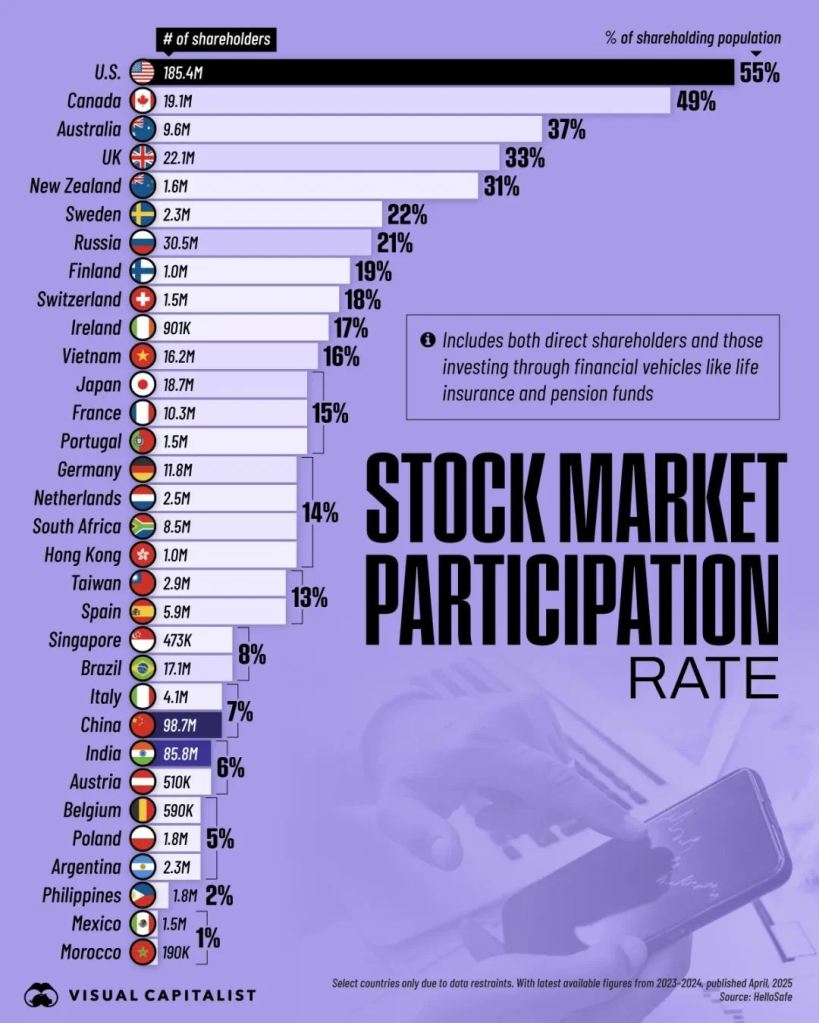
We live in an era where life expectancy is rising, pension systems are shrinking, and inflation quietly erodes the real value of money. In this context, the stock market is one of the most effective tools to preserve purchasing power, protect savings, and build wealth over the long term. And yet, as illustrated by a recent infographic from Visual Capitalist, many countries show an alarmingly low level of participation in the markets.

A Wave Passing Beneath Our Feet

In the United States, more than 55% of the population is exposed to financial markets—whether through direct equity ownership, retirement funds, ETFs, or 401(k) plans. In Canada (49%) and Australia (37%), investing is equally normalized—seen as a responsible, even essential, part of adult life.

In stark contrast, only 7% of Italians invest in stocks. The picture is similarly bleak in India (6%), Brazil (8%), and China (6%). This means the vast majority of citizens in these countries do not benefit from one of the most consistently profitable avenues for long-term growth. For example, the S&P 500 has delivered an average annual return of around 10% over the past 90 years. No savings account or government bond can match this over time.

A Practical Example: What Happens to €10,000 Over Time?

  • In a bank account (0% return): In 20 years, it remains €10,000—but inflation will have eaten away 30–40% of its real purchasing power.
  • Invested in global equities at a 7% average annual return: It becomes around €38,000.

The difference is staggering. Not investing means standing still while the world moves forward.

Financial Literacy: The Real Divide Between North and South

The true difference between market participants and non-participants isn’t income—it’s culture.

In Anglo-Saxon countries, financial education begins early—often in high school—and is reinforced by systems that empower citizens to take control of their financial futures. In countries like Italy, however, personal finance is virtually absent from school curricula and often taboo at home. As a result, many people view the stock market as a form of gambling, while leaving their money idle in low-yield accounts.

According to the Bank of Italy, only 30% of Italians understand basic financial concepts such as compound interest, inflation, or diversification—well below the OECD average (Bank of Italy – Household Finance Survey, 2023).

Fear of Risk Is the Greatest Risk of All

Ironically, it’s often fear of losing money that prevents people from making money. But today, the greatest financial risk isn’t market volatility—it’s allowing your money to wither away, untouched and unprotected.

Yes, markets fluctuate. There are downturns and crises. But history shows that long-term investors who stay the course typically come out ahead. Even someone who invested right before the 2008 crisis or the 2020 pandemic crash would likely be sitting on substantial gains today. Time, not timing, is the investor’s best friend.

Global Case Studies

  • Australia: The mandatory superannuation system—a national retirement fund scheme—has transformed millions into investors. Today, 37% of Australians own stocks.
  • Vietnam: Despite modest per capita income, market participation has reached 16%, driven by digital access and strong generational optimism.
  • Germany: Traditionally conservative, German households have doubled their investment activity since 2019, largely through ETFs and automated investing platforms.

Investing Is Not Just an Opportunity—It’s a Civic Duty

Investing is not only a personal choice—it’s a collective economic behavior with wide-reaching consequences. The more citizens invest, the more capital flows into businesses, the more resilient the economy becomes, and the less pressure there is on public pensions.

In an era where the welfare state is retreating and financial responsibility is shifting to the individual, the stock market is one of the few remaining tools for economic self-defense.

Conclusion: Investing Is an Act of Freedom

Refusing to invest—whether out of fear, ignorance, or misinformation—is essentially a silent declaration: a resignation to stagnation, a surrender of future potential. This is all the more tragic in a world where low-cost investing tools are accessible and widespread.

Countries like Italy, Brasil and Spain must stop viewing investing as a privilege for the few and start treating it as a right for all. This requires a cultural revolution—starting in classrooms, families, and media. Because to invest, like to work, save, and build, is not just a financial decision. It’s a life choice.

Nvidia GTC 2025: Disruptive Innovations in Artificial Intelligence and Beyond

The Nvidia GTC 2025 conference recently came to a close, and as always, it offered an incredible glimpse into the future of technology. The company’s CEO, Jensen Huang, took the stage with his iconic leather jacket to unveil a series of innovations that promise to redefine the landscape of artificial intelligence and high-performance computing. From cutting-edge supercomputers to the power of generative AI, through advanced applications in robotics and gaming, Nvidia is laying the foundation for a true technological revolution. Here is an in-depth analysis of the key innovations unveiled.

Blackwell: The Architecture that Will Change the Game

The crown jewel of GTC 2025 is undoubtedly the introduction of Blackwell, a new architecture designed to push the limits of deep learning and high-performance computing. This technological leap is not just an update but rather a “paradigm shift,” as Huang put it. The new GPUs based on Blackwell promise unprecedented performance, with a speed increase of up to 4 times greater than the previous Hopper generation. But it’s not just about power: energy efficiency has received significant attention, with a 50% reduction in energy consumption, ensuring high performance without waste. This new level of efficiency is especially crucial for the future of data centers and cloud computing, where cost and resource optimization are key to maintaining competitiveness and sustainability.

With Blackwell, Nvidia is not only improving computational power but is also shaping the next generation of AI, particularly in handling increasingly complex artificial intelligence models. The approach taken is to make artificial intelligence not only more powerful but also accessible and scalable for businesses of all sizes.

AI for Everyone: Democratizing Access to Advanced Solutions

One of the main themes that emerged from GTC 2025 was Nvidia’s desire to make artificial intelligence more accessible to businesses of all sizes, including those with fewer resources or less technical expertise. It’s no longer enough to develop powerful hardware; the software must also be simple and scalable. For this reason, Nvidia unveiled significant updates to Nvidia AI Enterprise, its framework for adopting and managing enterprise AI solutions. The most interesting development in this area is the launch of Nvidia NIM, a framework that simplifies the development and deployment of advanced AI models. This platform enables startups and small and medium-sized businesses to leverage the power of AI without the need for deep technical knowledge, dramatically lowering the entry barrier to the world of artificial intelligence.

Generative AI: The Vanguard of Digital Content Creation

The years 2023 and 2024 were pivotal for generative AI, and Nvidia is determined not to be left behind. The company showcased several groundbreaking solutions in the field of automated content generation, particularly in the creation of advanced language models, image and video generation, and real-time creation of hyper-realistic 3D content. Nvidia’s new Omniverse AI system is a platform that enables the generation of ultra-detailed virtual environments with minimal text input, a giant leap towards creating complex and believable digital worlds with an unprecedented level of realism.

This platform not only revolutionizes the metaverse and the gaming industry but also has enormous potential in industrial simulations. Imagine a company that, with a simple prompt, can design virtual environments to test new prototypes or train employees in complex scenarios. Omniverse AI could reduce costs and accelerate the innovation process significantly.

Gaming and Graphics: Advanced Ray Tracing and Upscaling AI

While much of the focus was on AI, Nvidia hasn’t forgotten its gaming enthusiasts. The new Blackwell cards bring significant improvements in advanced ray tracing, delivering superior visual quality and more efficient management of demanding, visually intense games. But the real innovation is the introduction of AI-powered upscaling technology, which allows for smoother images and incredible details even on less powerful hardware. This development will be crucial for players who don’t have high-end gaming PCs, allowing them to enjoy extraordinary visual experiences on more affordable setups.

Additionally, Nvidia’s collaboration with game development studios to integrate the new AI-driven rendering engine could lead to games with unparalleled realism. The result is not only visually stunning but also deeply immersive gaming experiences.

Robotics and Industrial AI: Machines that Learn on Their Own

Another sector Nvidia is aggressively pushing forward is robotics and industrial AI. With the new Isaac AI framework, the company is developing solutions that allow robots to learn autonomously, improving their ability to interact with their environments. This technology has the potential to transform industries such as logistics, manufacturing, and even healthcare, where robots could operate more efficiently and safely.

Thanks to collaborations with leaders in the robotics sector, Nvidia aims to create intelligent machines that can reduce operational costs and optimize efficiency in industrial operations. Self-learning robots could, for instance, be used in production environments to detect anomalies, perform repetitive tasks, or even assist in healthcare.

Supercomputers and Cloud AI: Dominating AI-as-a-Service

Lastly, Nvidia made further strides in the field of cloud computing and supercomputers. With its expanded computational capabilities, the company is preparing to dominate the AI-as-a-Service market, offering businesses the ability to access immense computational power without the need for costly hardware investments. The new solutions for data centers enable companies to leverage the power of Blackwell and other Nvidia technologies to develop advanced AI solutions, reducing costs while increasing flexibility.

Conclusion: A Promising Future for Nvidia and AI

In conclusion, Nvidia GTC 2025 has cemented the company’s position as one of the undisputed leaders in technological innovation, with a particular focus on artificial intelligence. With Blackwell and its new solutions, Nvidia is not only improving computational power but also striving to make AI more accessible and scalable for a broader audience. The applications in gaming, robotics, and supercomputing are evolving at an unprecedented rate, and the growing emphasis on generative AI opens up new frontiers in digital content creation.

While competition in the sector remains fierce, Nvidia appears to have a significant strategic advantage, thanks to a clear vision and cutting-edge technological solutions. As we look to a future increasingly shaped by artificial intelligence, the question now is: how will other industry players respond, and what will Nvidia’s next moves be? The answer to this question will shape the technological landscape for years to come.

Russia’s Return to Financial Markets: Opportunities or a Dangerous Gamble?

In recent months, an unexpected trend has begun to emerge in the global investment landscape: some investors, who once avoided any involvement with Russia, have started eyeing Russian debt. The area of interest is particularly focused on dollar-denominated bonds issued by Gazprom, with demand primarily coming from family offices in the Middle East, always on the lookout for opportunities in the international financial arena. However, gaining access to these opportunities is no easy feat: the holders of these assets are either unwilling to sell or are asking for prices far higher than the current market value. The scarcity of supply, combined with rising demand, has pushed prices up, causing the yields on Russian bonds in dollars and euros to drop by around five percentage points just in February.

Adding more intrigue to this scenario are the signs coming from major investment funds, which are receiving offers from Wall Street to bet on the ruble through financial derivatives that are not subject to sanctions. The forecasts are bold: according to Russia’s Central Bank data, the ruble has gained 13% against the dollar since the start of the year. Major banks like Goldman Sachs and JPMorgan are acting as intermediaries to facilitate this renewed interest in Russian assets. This is a clear signal of growing hope that Donald Trump’s political openness toward Moscow could eventually lead to the removal of sanctions imposed after Russia’s invasion of Ukraine in 2022.

A Geopolitical Gamble: Economic and Political Risks

Russia’s return to global financial markets is not just an economic matter but also deeply geopolitical. Behind this shift lie hundreds of billions of dollars in investments and trade deals, which could be redefined depending on the stance taken by key international players such as the United States and the European Union. Russia, in fact, is attempting to attract Trump with promises of new joint projects between Moscow and Washington. However, investors betting on the end of sanctions must contend with significant political and legal uncertainties.

On the one hand, there’s the reputational risk for those choosing to re-engage with a country embroiled in Europe’s largest war since World War II. On the other hand, the legal uncertainties remain just as challenging. If sanctions aren’t fully lifted, investments could turn to scrap paper, leaving investors with nothing but losses.

Trump himself recently stated on March 7 that he was “seriously considering” imposing new banking sanctions on Moscow, while also continuing efforts to negotiate a peace deal. Meanwhile, in Europe, there is ongoing debate about plans to increase military spending to €800 billion to address an uncertain future, further adding fragility to the situation.

A Rocky Return: Obstacles to Capital Re-entry

Despite rising curiosity among investors, Russia’s return to global financial markets will not be quick or easy. After over three years of war, Russia’s economy has adapted to a new structure, with military spending taking center stage. For 2025, the Kremlin plans to allocate 40% of the national budget to defense and internal security.

Moreover, Russia itself may not be particularly enthusiastic about welcoming Western investors back. After the multinational exits in 2022, Moscow imposed harsh conditions on companies wishing to leave the country, forcing them to sell their assets at fire-sale prices or transfer them to oligarchs close to the Kremlin. It’s feared that Russia may apply similar selective criteria for those looking to re-enter, favoring only those investors who can bring tangible benefits to Russia’s economy.

Will Sanctions Really Be Lifted?

Currently, hundreds of Russian entities, including politicians and oligarchs, remain under Western sanctions. Over $300 billion from the Russian Central Bank are frozen in Europe and the United States, with another $58 billion belonging to Russian oligarchs blocked. Although Putin doesn’t seem particularly eager to seek the removal of sanctions for his billionaires, as they may actually benefit from them by forcing them to invest within Russia, the situation remains complex.

Despite the sanctions, Russia has never been fully isolated. Through trade with China and other Asian countries, Moscow has managed to bypass many restrictions, selling oil at discounted prices via a “shadow fleet” of tankers. Trade between Russia and China grew by 66% from 2021, reaching a record $244.8 billion in 2024. However, some Russian companies, particularly in the commodities sector, are beginning to worry about excessive dependence on China and would be willing to sell again to the West—if only they could.

Trump and the Power to Lift Sanctions

Trump, with his executive powers, could revoke many of the sanctions currently in place with a simple presidential order. However, he would not have free rein: some measures require a 30-day review period and could necessitate a Congressional vote. Even if the United States were to ease sanctions while Europe maintained them, it would create significant confusion for global companies operating across borders.

Conclusion: An Unlikely Future, But Not Impossible

Russia’s return to global financial markets is a complex issue, filled with uncertainty. Although some investors smell an opportunity, the geopolitical risks and legal instability make long-term predictions difficult. Moreover, the world of global finance is not immune to political shifts, and sudden changes in international relations can completely upend any forecasts.

The conditions for Russia’s return to financial markets will be drastically different from the past. Those betting on this possibility today may find themselves facing a more selective, more demanding Russia—one perhaps less willing to accept Western capital without asking something substantial in return. The key lesson, therefore, is that the future of markets is more than ever influenced by political dynamics, and uncertainty will continue to dominate the Russian investment landscape.

Are Tariffs Really Beneficial for the U.S.?

Let’s set the record straight right away: tariffs are nothing more than a tax imposed on goods a country imports from another. Imagine you’re buying a pair of shoes from a foreign store. Without tariffs, you just pay for the shoes and shipping. With tariffs, however, that price gets bumped up with an extra tax, increasing the final cost. Now, you might ask, “Why do these tariffs exist?” The answer is more complicated than it seems, but at its core, it all comes down to trade policy. The truth? In the long run, tariffs are a bomb that blows up the economies of the countries imposing them, causing more harm than good. But let’s break it down.

Trump and the Tariff Threat: The Return of the Trade War

For several months now, tariffs have been back in the spotlight, mainly thanks to Donald Trump. The U.S. president has ridden the wave of protectionism, threatening to impose tariffs on a slew of products from countries like China, the European Union, and even Canada and Mexico. His official goal is to protect American companies and workers, trying to push foreign producers to shift their manufacturing to the U.S., thereby benefiting local producers.

But the truth is that the result of these tariffs hasn’t exactly been what was expected. Instead of boosting the American economy, Trump has created a spiral that has harmed both consumers and American companies.

How Tariffs Work and Why They’re Harmful

Imagine you’re a business owner importing machinery from another country. With tariffs, the cost of that machinery rises. Now, you have two choices: you can either keep your product prices the same, but in that case, you’ll have to reduce your profit margins, or you can raise prices to maintain competitiveness, passing on the cost of the tariffs to the consumers. And here’s where the problem starts.

The final consumer ends up paying more for the same goods, and the immediate effect is a reduction in consumer spending. If a person has to pay more for an imported t-shirt or a car, they’ll spend less on other things, like a vacation or going out with friends. The overall demand for goods and services drops, creating a negative spiral that reflects across the entire economy.

In other words, tariffs are not a solution but a problem that impacts every level of the economy. And let’s not forget that the impact of tariffs isn’t limited to the imported sector. If a country’s industry is forced to pay more for imported raw materials, the cost of production rises, which could lead to price hikes on products in the domestic market.

The Parallel with Financial Markets

Now, let’s get to the heart of the matter: tariffs also have devastating effects on financial markets. The threat of tariffs has caused instability, resulting in market volatility. The reason is simple: tariffs create uncertainty. Investors don’t know what to expect, and an uncertain market is one that doesn’t inspire confidence.

Take, for example, the periods when Trump announced tariff threats. The result was almost always panic. Stock markets began to plummet because investors feared that a global trade war could reduce company profits, especially for those dependent on imports and exports. Think of giants like Apple, which manufactures its devices in China. A tariff increase on components could force Apple to either raise its prices or reduce its profit margins, negatively affecting its earnings.

The outcome of all this is that the market enters a phase of contraction, where investors, concerned about potential losses, begin selling off stocks, driving share prices down. Uncertainty breeds fear, and fear leads to a reduction in investments, further slowing down economic growth.

The Effect of Tariffs and Exchange Rates: The Balancing Act

In the short term, tariffs seem to have a direct and immediate impact on prices and the economy, but in the medium to long term, there’s another factor that comes into play: exchange rates. When a country imposes tariffs, it not only raises the cost of imported goods but can also influence the value of its currency, triggering a complex mechanism that can be “mediated” through the currency exchange rate.

Take the United States as an example. If Trump imposes tariffs on Chinese imports, China may respond by devaluing its currency. A devaluation makes Chinese products cheaper for the U.S., partially offsetting the effect of the tariffs. In this case, the devaluation of the Chinese yuan could keep Chinese exports competitive, despite the tariff-induced price hike. On the other hand, the U.S. dollar could strengthen, making American exports more expensive to other countries, reducing the competitiveness of American businesses abroad.

In the medium to long term, these adjustments in exchange rates can soften the direct effects of tariffs, but they don’t eliminate the volatility created in the markets. Furthermore, the effects on exchange rates are difficult to predict and depend on a range of factors, including the monetary policies of central banks and investor expectations. So, while exchange rates can “mitigate” the impact of tariffs, the confusion and uncertainty they generate are another destabilizing factor for global markets.

In essence, exchange rates act as a sort of “filter” that tries to compensate for the effects of tariffs, but in an interconnected economic system, the responses are never linear, and the adjustments are often slower and more complicated than anticipated.

The Collateral Damage: Who Loses?

In the end, the people who lose are always the consumers and workers. Consumers lose because they pay more for goods. Workers lose because, in many cases, companies are forced to cut production, lay off employees, or move factories abroad to avoid the high costs. The overall effect of a protectionist policy is that it reduces competitiveness and efficiency in an economy, risking a stagnation.

What Can We Learn from Tariffs?

We’ve learned that tariffs are a superficial solution, providing the illusion of protecting the national economy, but in reality, they cause more damage than they solve. They are a bit like medicine that relieves the symptoms of an illness, but in the long run, worsens the situation.

History shows us that global economies are interconnected, and protectionist policies only create friction, raising costs and limiting growth opportunities. True growth comes from market openness, innovation, and cooperation, not from building economic walls.

Conclusion: Better Without Tariffs, Thanks

In a world already facing huge challenges, like climate change and digital transformation, the solution is not to raise trade barriers. Instead, we should focus on policies that promote global integration and innovation. Only then can we genuinely stimulate sustainable economic growth. Because, in the end, when the economy grows, opportunities grow for everyone. And all of this, without the need for tariffs.

Three Years Since the Russian Invasion of Ukraine: A Tragedy That Taught Us Valuable Lessons

Today, February 24, 2025, marks exactly three years since the Russian invasion of Ukraine. This event has profoundly impacted not only the history of our time but also global geopolitics and the way we live. The human suffering, destruction, and uncertainty that followed this conflict are difficult to measure, but the world did not stop. Global economies, investors, and financial markets have continued to evolve, adapting to a situation that initially seemed impossible to predict.

Today, we want to reflect on what these three years have taught us. Not only about political and military dynamics but also about how such significant geopolitical events can influence financial markets, and, most importantly, how we can draw lessons from history to face future uncertainties.

The Stock Market’s Reaction to Geopolitical Shocks

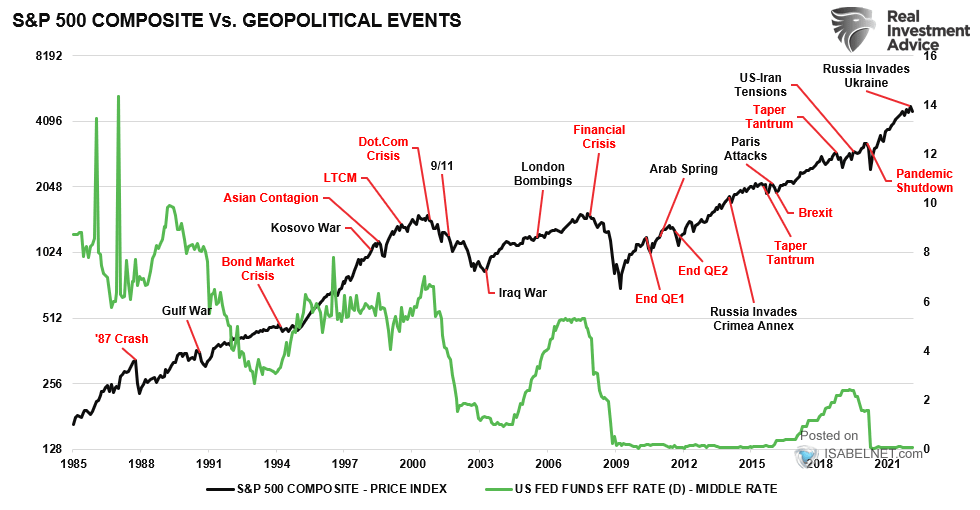
The situation in Ukraine made me reflect on how geopolitical events influence financial markets. One of the most useful tools for understanding these dynamics is historical analysis, particularly the LPL Research chart, which shows the S&P 500’s reaction during major geopolitical shock events over the last decades.

What stands out from this analysis is clear: wars and geopolitical shocks can create turmoil in financial markets, but historically, they have never led to the end of the stock market. Sure, there are moments of intense volatility, but the market has always had the ability to recover. Crises, while painful and destabilizing, are part of the cyclical nature of markets.

The interesting fact, however, is that the emotional reaction caused by these events remains similar over time. Fear, uncertainty, and instability drive mass sell-offs, but that does not mean the market crashes permanently. In fact, looking at past events, we can see that the market, despite initial turbulence, has always rebounded. Therefore, although no one can predict with certainty what will happen in the future, history teaches us to reason rationally rather than follow the emotional impulse of the moment.

The Lesson of Human Progress: Investing with Rationality

Geopolitical crises show us the resilience of society and human economies. History teaches us that, despite the initial chaos, opportunities for growth and progress never stop. Over the long term, the market has always reacted to crises with innovation, adaptation, and, above all, a desire to overcome adversity.

Take past wars as an example: World War II, the Vietnam War, or even the 2008 financial crisis. In all of these cases, the market reactions were initially severe, but eventually, the economy recovered and continued to grow. It is essential to remember that humanity has an extraordinary capacity for renewal, and this is something investors need to keep in mind.

History teaches us that the odds are in our favor when we bet on creativity, technological progress, and resilience. The war in Ukraine, sadly, is an example of how devastating geopolitical events can be, but also of how, in the long term, the adaptability of markets and global economies can transform these challenges into opportunities for growth.

Geographic Diversification: Protection Against Shocks

Another crucial lesson that emerges from situations like the Russian invasion of Ukraine is the importance of geographic diversification in investments. When the Russian stock market collapsed by 50% on February 24, 2022, the negative effects were felt immediately. However, the losses were not universal, and diversification played a key role in mitigating the impact.

To provide a concrete example, Russia accounted for 0.38% of the MSCI All World Index and 2.99% of the MSCI Emerging Markets Index. This means that even if the Russian economy had completely collapsed, the total loss for global investors would have been limited to 0.38% in one case and 2.99% in the other. This example underscores the importance of having a well-diversified portfolio geographically, to limit the impact of isolated events that may trigger strong turmoil in a specific region.

Geographic diversification is not only a prudent strategy; it is a real form of protection against uncertainty. When a local market experiences severe shocks, other sectors or geographic areas may still perform positively, compensating for the losses. History teaches us that events like wars, political crises, or economic shocks have a limited impact if the portfolio is well-balanced across different regions and sectors.

Conclusion

Looking back at these three years, we can see how the stock market, despite the initial difficulties caused by the Russian invasion of Ukraine, is slowly recovering. Resilience and the ability to adapt are intrinsic characteristics of markets, and our role as investors is to navigate uncertainty with rationality, keeping in mind the lessons of the past. Geographic diversification is a fundamental strategy for protecting your portfolio and handling periods of turbulence.

The future is never certain, but with proper planning, we can be better prepared to face it with greater confidence, knowing that hardships, no matter how significant, are never meant to last forever.

Stock Buybacks: Why Companies Repurchase Their Own Shares and What It Means for Shareholders

Stock buybacks, or share repurchases, have become a prominent feature in modern corporate finance. For many companies, buying back their own stock has become an integral part of their capital allocation strategy. But why do companies engage in buybacks? How do they impact shareholders? And, perhaps more importantly, when are stock buybacks truly beneficial for shareholders, and when do they raise questions about a company’s long-term health?

In this article, we’ll explore the motivations behind stock buybacks, their advantages and disadvantages, and when investors should be cautious about such corporate actions.

What Are Stock Buybacks?

A stock buyback occurs when a company purchases its own shares from the open market, thereby reducing the total number of outstanding shares. This reduction in shares can increase the ownership percentage of remaining shareholders, as well as improve key metrics like earnings per share (EPS) and return on equity (ROE). Essentially, a buyback allows a company to return capital to shareholders without the complexity of paying dividends.

Why Do Companies Repurchase Their Own Shares?

Companies engage in stock buybacks for a variety of reasons, but the most common motivations are as follows:

  1. Undervaluation Perception: One of the most compelling reasons for a buyback is the belief that the company’s stock is undervalued in the market. If a company’s management believes that the market is not fully recognizing its potential, repurchasing shares can be a way to take advantage of the perceived discount, effectively investing in its own future growth.
  2. Capital Allocation Strategy: Companies may have excess capital on hand—often in the form of cash reserves—without immediate investment opportunities that generate returns above their cost of capital. In such cases, buybacks can be a more efficient way to use excess funds, compared to expanding the business or pursuing acquisitions. This is particularly common in industries where organic growth opportunities are limited or where corporate expansion is relatively slow.
  3. Boosting Earnings Per Share (EPS): By reducing the number of shares in circulation, buybacks increase earnings per share (EPS), even if the company’s overall profits stay the same. Since EPS is a widely followed financial metric, this can make the company appear more profitable and potentially drive up its stock price.
  4. Tax Efficiency: In some jurisdictions, capital gains from the sale of shares may be taxed more favorably than dividends. Therefore, companies might prefer buybacks as a way to return capital to shareholders in a tax-efficient manner, especially when the tax burden on dividends is high.
  5. Return Capital to Shareholders: Instead of distributing cash through dividends, a buyback allows shareholders to decide if they want to sell their shares back to the company, giving them more flexibility in how they receive capital. This can be seen as a more attractive option for shareholders who may not want to receive dividends due to tax considerations or who may prefer capital appreciation.

When Are Stock Buybacks Beneficial to Shareholders?

While buybacks can be a sign of a company’s financial health and discipline, they do not always lead to positive outcomes for shareholders. The timing and execution of the buyback are crucial factors in determining whether it will benefit shareholders.

Here are some scenarios where stock buybacks are generally favorable for shareholders:

  1. When a Company Is Undervalued: If the company’s management believes the stock is undervalued, repurchasing shares can be a wise use of capital. This is especially true if the company’s intrinsic value—based on its assets, earnings potential, and competitive advantages—significantly exceeds the current market price. In this case, buybacks can create long-term value by purchasing shares at a discount, potentially benefiting existing shareholders as the market re-rates the stock.
  2. Excess Cash Without Better Investment Opportunities: When a company is sitting on significant cash reserves but doesn’t have clear, high-return investment opportunities, buybacks can be a logical decision. It’s better to return excess capital to shareholders than to keep it locked up with minimal returns. For shareholders, this means a more efficient use of capital and a potential increase in the value of their holdings due to the reduced share count.
  3. Favorable Timing and Market Conditions: If buybacks are executed at an opportune time—such as when market conditions are stable and the company’s stock price is depressed due to broader market trends—a buyback can be an efficient way to deploy capital. Investors benefit as the share price recovers over time, especially if the company maintains its underlying business fundamentals.
  4. Boosting Long-Term Value: Buybacks can have a positive impact on long-term shareholder value if they reflect management’s confidence in the company’s prospects. When buybacks signal that a company is using its capital in a strategic and disciplined manner, shareholders may see a long-term uplift in both the stock price and profitability.

When Are Stock Buybacks Not Favorable to Shareholders?

While stock buybacks can be beneficial in certain conditions, they can also be counterproductive, particularly when they are done for the wrong reasons or in inappropriate circumstances. Here are some situations when stock buybacks may not work in favor of shareholders:

  1. When Companies Are Overpaying for Shares: If a company is buying back stock at an inflated price—especially when its shares are overvalued or its fundamentals do not support the market price—the buyback may not be creating value. In such cases, the company is essentially wasting shareholder capital by repurchasing shares at a price higher than their intrinsic value, which can be detrimental to long-term returns.
  2. When Used to Mask Weak Performance: Sometimes, companies use buybacks to artificially inflate earnings metrics like EPS or return on equity (ROE), making the business appear more profitable than it is. If a company is struggling with slow growth or declining profits but continues to repurchase shares to prop up these metrics, it may indicate that management is prioritizing short-term stock price movements over addressing underlying issues. Shareholders may be misled into thinking the company is in better shape than it really is.
  3. Lack of Transparency or Strategy: If buybacks are carried out without clear communication or a transparent strategy, they may signal that the company is not confident about its long-term growth. A company that continually buys back stock without explaining its rationale could be trying to mask underlying weaknesses or avoid investing in its core business operations. For shareholders, this could signal a lack of long-term vision or strategic clarity from management.
  4. Diverting Capital from Growth Opportunities: A company that spends too much money on buybacks at the expense of reinvesting in its business, research and development (R&D), or expansion efforts could be stunting its long-term potential. In this case, while shareholders may benefit from short-term stock price boosts, they could miss out on greater value that could have been created through long-term investments in growth.

Conclusion: Stock Buybacks – A Double-Edged Sword

Stock buybacks are a powerful tool in the arsenal of a company’s financial strategy. When executed with care and for the right reasons—such as returning excess capital, correcting market undervaluation, or optimizing capital structure—buybacks can enhance shareholder value and signal strong financial health.

However, when buybacks are misused—such as when companies overpay for shares, use them to mask weak performance, or prioritize short-term stock price boosts over long-term growth—they can ultimately harm shareholder value and undermine investor trust.

For investors, the key to understanding stock buybacks lies in the timing, transparency, and intent behind them. Thoughtful and strategic buybacks can drive long-term value, while poorly executed ones can merely serve as a smokescreen for deeper issues within the company.

Ultimately, like any corporate action, stock buybacks need to be analyzed in the broader context of the company’s strategy, financial health, and market conditions. Shareholders should remain vigilant, assessing whether buybacks align with long-term value creation or simply reflect management’s attempt to appease short-term market demands.


India’s Game-Changing Reforms: A New Era for Global Investments

In today’s global context, marked by growing trade tensions and protectionist policies, India is standing out as an example of economic openness and innovation. While countries like the United States, under the presidency of Donald Trump, have adopted more aggressive tariff policies to protect local industries, India is instead focusing on attracting foreign investments through a series of fiscal reforms and economic policies aimed at enhancing global integration. India’s approach contrasts sharply with other nations that view protectionism as a response to internal economic challenges.

At a time when international trade is shaped by the trade rivalry between superpowers like the U.S. and China, India is positioning itself as a beacon of stability and opportunity for global businesses. The reforms announced in the 2025 budget are a clear testament to the country’s intention to push for further market openness, reduce bureaucracy, and foster growth through foreign investments. This approach not only has the potential to strengthen India’s economy but also offers a competitive advantage to companies looking to invest in a country that provides increasingly rare opportunities for free market access in emerging markets.

India in the Spotlight: New Reforms to Attract Foreign Investments and Their Impact on the Economy

India is at a pivotal moment in its economic evolution. With the approval of the 2025 fiscal year budget, the Indian government has announced a package of fiscal reforms set to come into effect on April 1, 2025. These measures are designed to make India even more attractive to foreign direct investment (FDI). They promise to stimulate economic growth, reduce operating costs, and create new opportunities for global companies across various sectors. In this article, we explore how these reforms may affect India’s economy and the valuation of local companies, with a focus on how multinational companies worldwide can benefit.

1. New Tax Code: Simplification and Greater Transparency

One of the main innovations is the revision of the Tax Code. With the introduction of clearer and more transparent regulations, India aims to reduce legal disputes and ensure a more predictable environment for businesses. While corporate tax rates will remain unchanged, the simplification of the rules will provide greater certainty to multinational companies looking to invest in the country. This could lead to less bureaucratic complexity, a significant advantage for companies wanting to expand operations in a rapidly growing market like India.

This reform will enable companies to better plan their tax strategies, reducing the legal risks associated with understanding and applying the regulations, and improving India’s competitiveness as an investment destination.

2. Customs Duty Revisions: Incentives for Local Production

Another important move involves the revision of customs duties, with changes designed to stimulate local production. The new policies will provide tax exemptions for companies investing in domestic manufacturing, with the goal of boosting India’s industrial base. This approach will not only lower operating costs for foreign companies producing in India but will also incentivize the creation of production facilities, further supporting domestic economic growth.

Global companies choosing to establish manufacturing plants in India will benefit from potentially lower production costs, access to a growing market, and the opportunity to leverage an expanding consumer base.

3. Favorable Tax Regime for Non-Residents in the Electronics Sector

India has decided to introduce a favorable tax regime for non-residents operating in the electronics sector. This new system will impose a tax rate of 8.75% on gross revenues for companies providing technology or services in the electronics field. This measure is set to transform India into a global hub for technological innovation, encouraging investment in high-growth sectors such as semiconductor manufacturing, electronic devices, and digital solutions.

Global technology multinationals could benefit from a more favorable tax environment, making it easier for them to enter or expand in the Indian market, which is one of the world’s most promising for digitalization and the adoption of new technologies.

4. Simplified Tax Controls: Reducing Bureaucracy

Another significant step is the simplification of tax controls, particularly in the area of transfer pricing. Controls on transactions between affiliated companies, which were previously conducted annually, will now take place every three years. This reduction in the frequency of tax audits will ease the bureaucratic burden on companies, allowing them to focus more on growth and innovation. Additionally, the expansion of “safe harbors” will help minimize tax disputes, creating a more stable environment for foreign investors.

The introduction of these measures will make India a more business-friendly country, reducing uncertainties related to compliance costs and tax disputes.

5. Reforms in the Insurance Sector: New Opportunities for Foreign Investment

Finally, one of the most exciting developments is the reform of the insurance sector, which will allow foreign investors to acquire up to 100% of companies that reinvest in India. This represents a significant opportunity for global investors looking at India as a growing market for financial and insurance services. The changes could also spur greater innovation in the sector, leading to faster growth and enhanced competitiveness for local businesses.

Implications for the Indian Economy and the Market for Companies

The new fiscal measures and reforms have the potential to significantly impact the Indian economy, promoting sustainable growth and improving India’s position as a destination for global investment. Indian company valuations may rise as the influx of foreign investments boosts the growth of strategic sectors, including technology, manufacturing, and financial services.

Furthermore, India could become an increasingly important hub for technological innovation and advanced manufacturing, with a highly skilled and ever-evolving labor market, attracting companies from all over the world looking to capitalize on its potential.

In conclusion, these reforms make India an ideal environment for companies seeking to expand in the Asian market. The opportunities offered by the new fiscal policies, the incentivization of local production, the simplification of tax controls, and the liberalization of the insurance sector are just a few of the factors that could significantly reshape the landscape for foreign investments in the country.

How Sam Altman’s Vision for the Future Can Offer Insights Into Where to Invest

Sam Altman is not merely a pioneering figure in the world of technology; he is an architect of the future, a visionary whose ventures span across industries that will define the next era of human civilization. As former president of Y Combinator, co-founder of OpenAI, and a key force behind several groundbreaking innovations, Altman is not just shaping the future of artificial intelligence—he is fundamentally transforming how we approach wealth creation, sustainability, and even human longevity. His investment strategy is far-reaching, blending technological advancements with critical infrastructure such as energy, healthcare, and financial systems. This integrated approach hints at a future where wealth creation and social progress go hand in hand, ensuring that prosperity is both transformative and equitable.

Altman’s Multidimensional Vision: A Blueprint for the Future

While Sam Altman’s legacy is indelibly tied to OpenAI’s revolution of generative AI, his investments offer a far more nuanced and far-reaching blueprint. His worldview is rooted in the idea that technological breakthroughs alone aren’t enough to secure lasting prosperity. Instead, the future hinges on the symbiotic relationship between advanced technologies and the systems that govern our planet’s resources—energy, finance, and health.

The first component of this grand vision is the urgent need for sustainable, abundant energy. With the accelerating demands of artificial intelligence, which requires vast computing power, the world faces a growing energy crisis. Altman has recognized this challenge, positioning energy production as a cornerstone of his future-proof strategy. His investments in nuclear energy are particularly noteworthy. As the chairman of Helion Energy, a company dedicated to developing nuclear fusion, Altman has placed a staggering $375 million into a startup that promises to deliver commercial fusion power by 2028. Fusion power, often hailed as the “holy grail” of clean energy, holds the potential to generate virtually limitless energy without the environmental impact of fossil fuels. Despite the skepticism surrounding the feasibility of fusion within the promised timeframe, Altman’s commitment to this venture signals his confidence in the transformative power of fusion technology.

Moreover, Altman’s interest in energy innovation doesn’t stop with nuclear fusion. He has also invested in Oklo, a company that is developing small modular reactors (SMRs). These compact reactors could be a game-changer for global energy infrastructure, offering safe, efficient, and decentralized energy solutions. SMRs could revolutionize the way we produce and distribute energy, making clean energy more accessible to remote or underserved areas, and paving the way for a future where energy scarcity is a thing of the past.

Rethinking Wealth Redistribution: The Promise of Worldcoin

Energy is not the only system Altman seeks to transform. He is acutely aware that the financial systems of today are ill-suited to handle the potential windfall of wealth that new technologies like AI will generate. In a world where automation and AI promise to create value on an unprecedented scale, traditional financial models will likely fail to ensure equitable wealth distribution. Altman’s answer to this challenge lies in Worldcoin, a cryptocurrency platform that leverages biometric identification to create a universal and secure system for wealth distribution.

Worldcoin’s potential to disrupt traditional financial systems is enormous. At its core, Worldcoin aims to eliminate the risk of losing access to digital assets by linking them to an individual’s biometric identity. More importantly, it seeks to create an ecosystem where the wealth generated by automation and AI is shared equitably among the global population. In doing so, Altman is positioning Worldcoin as a vital part of a future where wealth is not confined to the hands of a few, but is distributed more evenly across society. This move reflects his broader philosophy that technological progress must go hand in hand with social progress.

The Future of Human Longevity: Investing in Life Extension

While many investors focus on immediate financial returns, Altman’s interests also extend to a more personal and existential dimension: the future of human health and longevity. His investment in Retro Bio Scientist, a company focused on cellular reprogramming, underscores his belief that extending human lifespan will be as transformative as any technological revolution. Retro Bio’s work, which involves reprogramming cells to reverse aging, could offer the potential to add decades to human life, radically altering how we think about work, retirement, and our place in the world.

By committing $185 million to Retro Bio, Altman is betting on the science of longevity as a key area of future growth. If successful, such technologies could reshape society in profound ways, offering people not only longer lives but healthier, more productive ones. The implications for the economy, labor markets, and even personal finance are vast, as longer lifespans may redefine retirement planning and wealth accumulation strategies.

Investing in the Future: Where to Place Your Bet Today

Altman’s portfolio provides a roadmap for anyone looking to invest with a long-term horizon in mind. The key takeaway? The future lies at the intersection of energy, finance, and health. Here’s how savvy investors can follow Altman’s lead:

  1. Sustainable Energy Production: The world’s energy systems are undergoing a profound transformation, and those who invest in clean energy technologies today will reap the rewards of a sustainable tomorrow. Nuclear fusion and small modular reactors are at the cutting edge of energy innovation and could unlock an era of limitless, clean power.
  2. Revolutionizing Finance: With the advent of AI and automation, traditional models of wealth distribution are becoming obsolete. Cryptocurrencies like Worldcoin are creating a new paradigm for how wealth will be shared in the future. Early investments in blockchain-based financial systems that focus on inclusivity and equity could offer extraordinary growth potential.
  3. Human Longevity and Biotechnology: Longevity is no longer a far-off dream—it’s an investment opportunity. As biotech firms race to unlock the secrets of aging, investing in companies that focus on life extension could provide long-term returns, both financially and philosophically. Altman’s investment in Retro Bio Scientist is a prime example of where the future of health is headed, and investors who follow suit may find themselves at the forefront of a revolution in human potential.

Conclusion: The Altman Ecosystem

Sam Altman’s investments represent a comprehensive and ambitious approach to shaping the future. Through his ventures in energy, finance, and human health, he is not merely preparing for a world powered by AI—he is building an ecosystem where the wealth generated by these innovations will be both sustainable and shared. His strategy is one that prioritizes not only technological advancement but also the equitable distribution of its benefits.

For investors, Altman’s work offers invaluable insights into where the future is heading. The integration of energy, finance, and human longevity will drive the next wave of economic and societal change, and those who invest in these areas today will be poised to thrive in a world that is rapidly evolving. The key is to recognize that true wealth creation in the 21st century will come from more than just innovation—it will come from innovation that aligns with the fundamental needs of humanity. Altman’s ventures are not just about building wealth; they are about creating a more sustainable, equitable, and long-lived future for all.

Self-Driving Taxis: A Future Business with Huge Potential to Invest in Today

In recent years, one of the most talked-about topics has been the future of autonomous taxis and how this technology could revolutionize the transportation sector. Many industry experts and financial analysts are convinced that the growth potential is enormous, both in terms of revenue and innovation. Imagine a city where millions of driverless vehicles operate, offering affordable and safe transportation. In this scenario, the economic opportunities are vast and could lead to a true transformation of the market. But the question arises: who are the major players in this race toward autonomy, and who holds the competitive edge in this new era?

The Economic Potential of Self-Driving Taxis

The introduction of self-driving taxis is not just a technological issue but an economic opportunity that could significantly increase the demand for vehicles. The transportation sector is one of the largest industries in the world, and the implementation of driverless vehicles could lower operating costs by eliminating the need for human drivers, creating a more efficient and accessible transportation system. Moreover, an increased number of autonomous vehicles could lead to a denser, more available taxi network, boosting the volume of rides and consequently the business potential.

According to a study by McKinsey & Company, the autonomous vehicle market could generate up to $800 billion in global revenue by 2035, provided the technology achieves large-scale adoption. The growth potential is massive, and companies that manage to dominate this revolution could gain an unprecedented competitive advantage. But who are these key players, and how are they preparing to conquer the future?

Key Players in the Autonomous Taxi Sector

  1. Waymo – A subsidiary of Alphabet (Google’s parent company), Waymo is one of the undisputed leaders in autonomous vehicle development. Waymo has tested its autonomous cars for millions of miles and has begun offering self-driving rides to the public in the Phoenix, Arizona area. With nearly unlimited resources and a decade of experience, Waymo remains one of the most advanced companies in the field.
  2. Cruise – Acquired by General Motors, Cruise is developing autonomous vehicles that aim to enter the self-driving taxi market. The company has recently announced plans to launch a fleet of driverless vehicles in major U.S. cities. Cruise benefits from the backing of one of the largest global automakers, with substantial resources for manufacturing and distribution.
  3. Aurora – Another important name in the industry is Aurora, founded by former executives from Google, Tesla, and Uber. The company has recently formed strategic partnerships with major players such as Toyota and Uber to develop autonomous vehicles. Aurora is making significant strides toward creating safe and scalable solutions for autonomous transportation.

Uber and Its Competitive Edge

While the aforementioned companies are all heavyweights with massive financial resources, Uber may have a decisive competitive advantage when it comes to self-driving taxis. Uber, in fact, is not just a tech company but holds a firmly established position in the global transportation market. Its ride-hailing business model provides access to an enormous customer base, and this could prove to be a key advantage in adopting autonomous vehicles.

Additionally, Uber has heavily invested in autonomous driving technology through its Uber ATG (Advanced Technologies Group), which it acquired in 2015, and more recently, it partnered with Aurora to develop and deploy autonomous vehicles. The synergy between Uber’s vast network and Aurora’s technological innovations could accelerate the rollout of self-driving taxis.

Uber’s Stock: An Opportunity Not to Be Missed?

Despite Uber losing ground in recent years, its stock may represent one of the most interesting long-term opportunities. The stock has shown significant volatility, largely due to increasing competition and financial challenges, but the potential tied to autonomous vehicles could radically change the company’s future. For example, since 2021, Uber’s stock has seen a sharp decline, losing over 40% of its value, but this downward trend could actually represent a buying opportunity in the long run, considering the imminent boom in autonomous driving.

Moreover, economic indicators suggest that Uber might be undervalued relative to its growth potential. Despite still unstable earnings, its strategic alliances and investment in advanced technology position the company ideally to capitalize on the future growth of the self-driving taxi market. With the global ride-hailing and autonomous vehicle market set to grow exponentially in the coming years, Uber is well-positioned to become one of the main beneficiaries of this revolution.

Why Uber is the Best Investment

In a market where competition is becoming increasingly fierce, Uber is well-positioned to capitalize on this new frontier. The company not only holds a leadership position in the ride-hailing space but also benefits from its experience in fleet management, technological infrastructure, and its global customer base—all factors that could enable it to dominate the self-driving taxi space. Moreover, Uber has already begun to integrate autonomous technology into its plans, forming strategic partnerships and investing in research and development.

Although Uber’s stock has struggled in recent times, the long-term growth prospects driven by autonomous vehicles could result in a sharp increase in its stock price in the coming years. With the self-driving taxi market set to grow exponentially, Uber stands in the best position to capitalize on this future shift.

Conclusion

The future of autonomous taxis is exciting and promises to radically transform the transportation sector. With the potential to revolutionize urban mobility and generate immense profits, companies that manage to master this technology will be in a privileged position. Among all the players in the field, Uber stands out for its combination of advanced technology, established market position, and strategic alliances. Despite recent challenges, Uber represents a long-term investment opportunity that could prove to be highly profitable, especially when the self-driving taxi revolution truly takes off.

If you’re an investor looking for opportunities in the mobility sector, Uber might just be the best investment to ride the wave of autonomous transportation’s future.