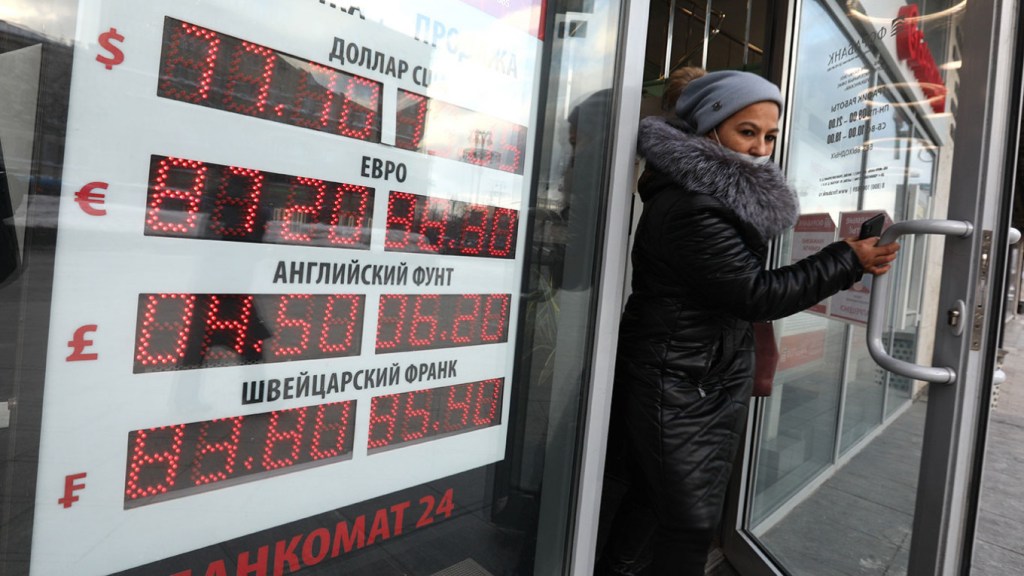
In recent months, an unexpected trend has begun to emerge in the global investment landscape: some investors, who once avoided any involvement with Russia, have started eyeing Russian debt. The area of interest is particularly focused on dollar-denominated bonds issued by Gazprom, with demand primarily coming from family offices in the Middle East, always on the lookout for opportunities in the international financial arena. However, gaining access to these opportunities is no easy feat: the holders of these assets are either unwilling to sell or are asking for prices far higher than the current market value. The scarcity of supply, combined with rising demand, has pushed prices up, causing the yields on Russian bonds in dollars and euros to drop by around five percentage points just in February.
Adding more intrigue to this scenario are the signs coming from major investment funds, which are receiving offers from Wall Street to bet on the ruble through financial derivatives that are not subject to sanctions. The forecasts are bold: according to Russia’s Central Bank data, the ruble has gained 13% against the dollar since the start of the year. Major banks like Goldman Sachs and JPMorgan are acting as intermediaries to facilitate this renewed interest in Russian assets. This is a clear signal of growing hope that Donald Trump’s political openness toward Moscow could eventually lead to the removal of sanctions imposed after Russia’s invasion of Ukraine in 2022.
A Geopolitical Gamble: Economic and Political Risks
Russia’s return to global financial markets is not just an economic matter but also deeply geopolitical. Behind this shift lie hundreds of billions of dollars in investments and trade deals, which could be redefined depending on the stance taken by key international players such as the United States and the European Union. Russia, in fact, is attempting to attract Trump with promises of new joint projects between Moscow and Washington. However, investors betting on the end of sanctions must contend with significant political and legal uncertainties.
On the one hand, there’s the reputational risk for those choosing to re-engage with a country embroiled in Europe’s largest war since World War II. On the other hand, the legal uncertainties remain just as challenging. If sanctions aren’t fully lifted, investments could turn to scrap paper, leaving investors with nothing but losses.
Trump himself recently stated on March 7 that he was “seriously considering” imposing new banking sanctions on Moscow, while also continuing efforts to negotiate a peace deal. Meanwhile, in Europe, there is ongoing debate about plans to increase military spending to €800 billion to address an uncertain future, further adding fragility to the situation.
A Rocky Return: Obstacles to Capital Re-entry
Despite rising curiosity among investors, Russia’s return to global financial markets will not be quick or easy. After over three years of war, Russia’s economy has adapted to a new structure, with military spending taking center stage. For 2025, the Kremlin plans to allocate 40% of the national budget to defense and internal security.
Moreover, Russia itself may not be particularly enthusiastic about welcoming Western investors back. After the multinational exits in 2022, Moscow imposed harsh conditions on companies wishing to leave the country, forcing them to sell their assets at fire-sale prices or transfer them to oligarchs close to the Kremlin. It’s feared that Russia may apply similar selective criteria for those looking to re-enter, favoring only those investors who can bring tangible benefits to Russia’s economy.
Will Sanctions Really Be Lifted?
Currently, hundreds of Russian entities, including politicians and oligarchs, remain under Western sanctions. Over $300 billion from the Russian Central Bank are frozen in Europe and the United States, with another $58 billion belonging to Russian oligarchs blocked. Although Putin doesn’t seem particularly eager to seek the removal of sanctions for his billionaires, as they may actually benefit from them by forcing them to invest within Russia, the situation remains complex.
Despite the sanctions, Russia has never been fully isolated. Through trade with China and other Asian countries, Moscow has managed to bypass many restrictions, selling oil at discounted prices via a “shadow fleet” of tankers. Trade between Russia and China grew by 66% from 2021, reaching a record $244.8 billion in 2024. However, some Russian companies, particularly in the commodities sector, are beginning to worry about excessive dependence on China and would be willing to sell again to the West—if only they could.
Trump and the Power to Lift Sanctions
Trump, with his executive powers, could revoke many of the sanctions currently in place with a simple presidential order. However, he would not have free rein: some measures require a 30-day review period and could necessitate a Congressional vote. Even if the United States were to ease sanctions while Europe maintained them, it would create significant confusion for global companies operating across borders.
Conclusion: An Unlikely Future, But Not Impossible
Russia’s return to global financial markets is a complex issue, filled with uncertainty. Although some investors smell an opportunity, the geopolitical risks and legal instability make long-term predictions difficult. Moreover, the world of global finance is not immune to political shifts, and sudden changes in international relations can completely upend any forecasts.
The conditions for Russia’s return to financial markets will be drastically different from the past. Those betting on this possibility today may find themselves facing a more selective, more demanding Russia—one perhaps less willing to accept Western capital without asking something substantial in return. The key lesson, therefore, is that the future of markets is more than ever influenced by political dynamics, and uncertainty will continue to dominate the Russian investment landscape.

 Rational Wealth